Visual flow builder
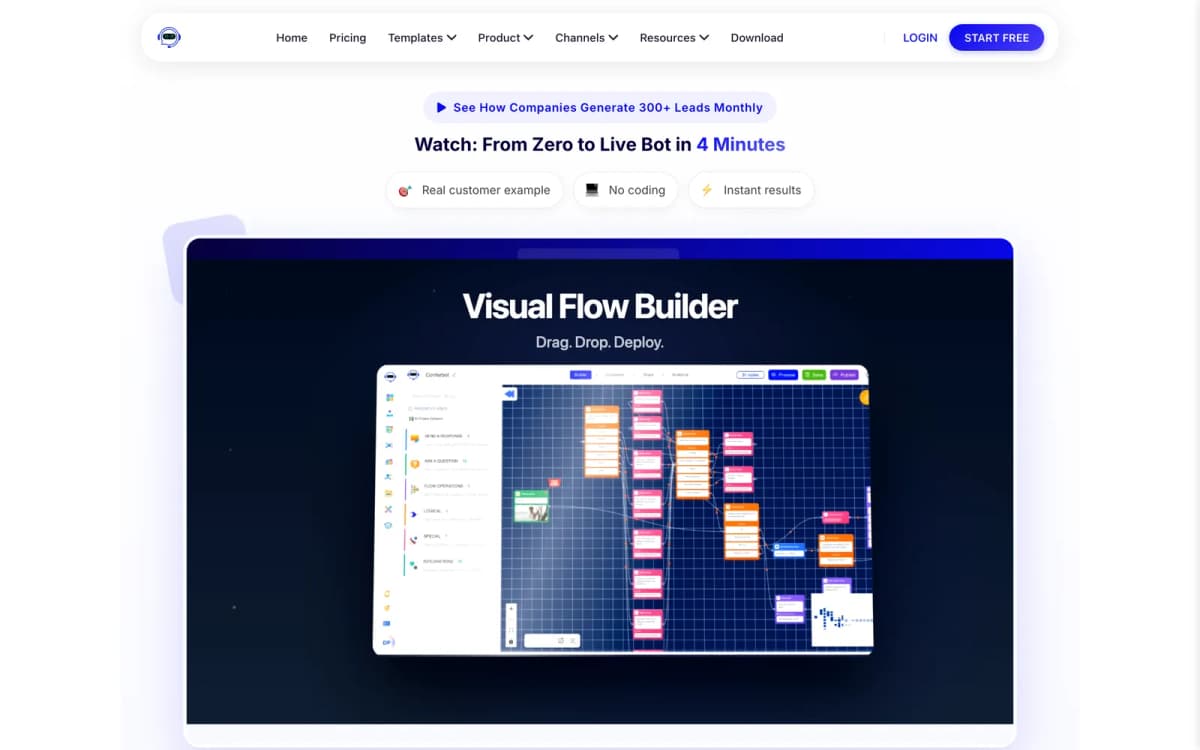
Conversation steps are nodes on a canvas, connected by drag and drop with a live preview, so a bot can be built and changed without code.
ConferBot is a no-code AI chatbot platform we built. Businesses design conversation flows on a visual canvas, add an AI agent that answers from their own knowledge, and publish one bot to their website, WhatsApp, Messenger, Instagram and other channels.
Updated
Overview
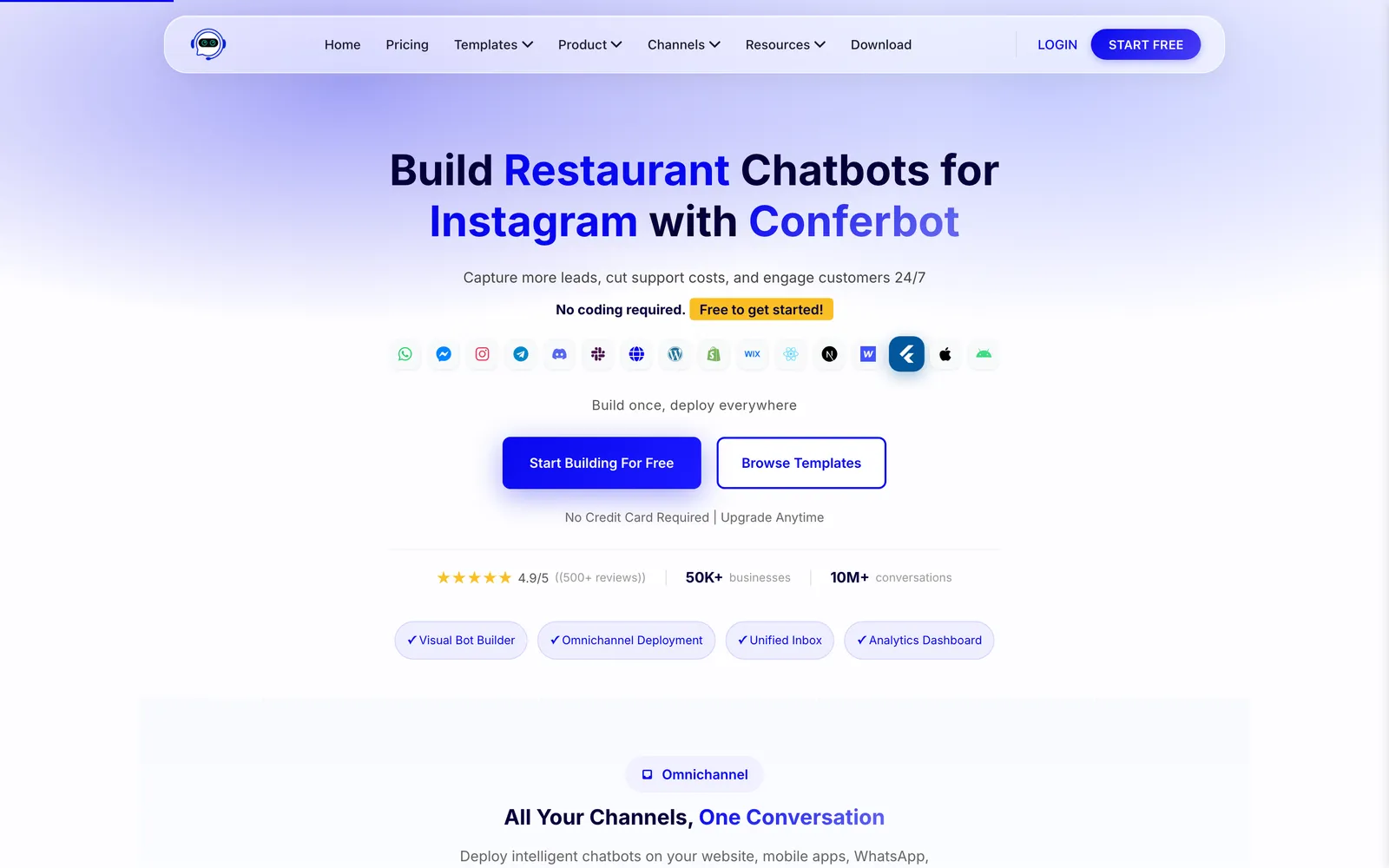
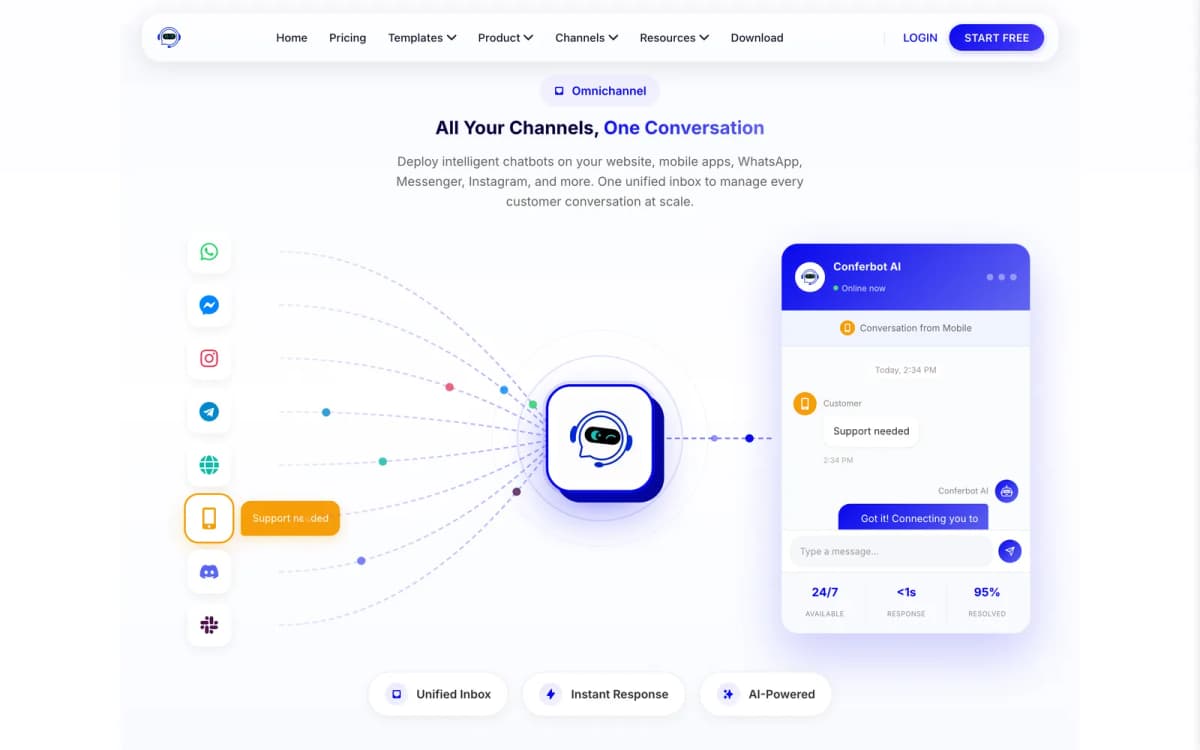
ConferBot lets a business build a chatbot without writing code. Flows are assembled from nodes on a visual canvas or started from a template library, and the finished bot runs as a website widget and on messaging channels including WhatsApp, Messenger, Instagram, Telegram, Slack and Discord. Conversations from every channel arrive in one inbox, where a person can take over.
We built the platform on React, Node.js, Express and MongoDB, with WebSockets for live conversations. It has grown well past a basic bot builder: the public site now describes an AI agent with human handover, a choice of 21 AI model providers on the customer's own API key, a knowledge base, ticketing and analytics, sold as a free plan and three flat-priced paid tiers.
The story in three steps
01 · Where it started
Small and mid-sized businesses get questions on more channels than they can staff: the website, WhatsApp, Instagram, Messenger. Most chatbot tools either need a developer for anything beyond a FAQ, or pick the AI vendor for the customer and fold its cost into per-message pricing.
ConferBot needed a builder a non-technical person could finish without help, one place to answer every channel, and a clean way to pass a conversation to a person when the bot should stop.
02 · What we built
We built the builder in React as a canvas: each step of a conversation is a node, steps are connected by drag and drop, and a preview shows the bot as it is edited. The same flow is published to the website widget and to each messaging channel. Conversations are stored in MongoDB and pushed over WebSockets into a shared inbox, so an agent can pick up any chat with its full history.
On top of the flows sits an AI agent. The business gives it a persona, its own knowledge and guardrails (topics it may and may not discuss), and sets when it escalates to a person: on negative sentiment, low confidence, a turn limit or a time limit. The model provider is a setting on each bot, so switching models does not mean rebuilding the flow.
03 · Where it stands
ConferBot is live at conferbot.com, with a free plan of 600 chats a month and paid plans from $19 a month, priced per workspace rather than per seat or channel.
We have no support-cost or response-time data of our own for ConferBot's customers, so we quote none.
Chapter 1
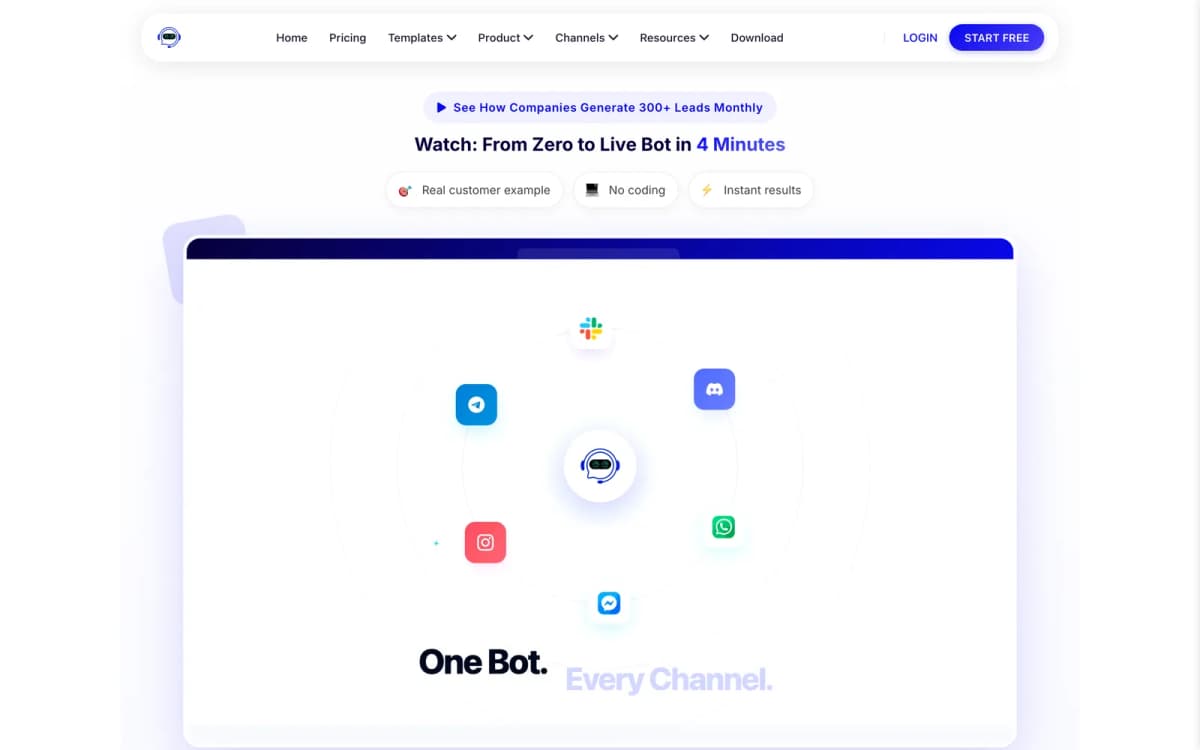
The idea behind ConferBot is that a business builds a conversation once. A flow is a set of nodes on a canvas: messages, questions, buttons, conditions and integration steps. It is stored once, and the same flow is what runs on every surface the business connects.
Those surfaces fall into four groups on the product's own channel page:
Because there is one flow, a change to a greeting or a qualifying question is made once and shows up everywhere. And because every channel writes into the same conversation store, every conversation lands in one shared inbox, whichever channel it started on. That inbox is where the bot and the team meet: the same record a person opens is the record the bot has been writing to, so there is no copy to keep in sync.
Chapter 2
Most chatbots fail at the edge of what they were scripted for. ConferBot's answer is three layers, each taking over where the last one stops.
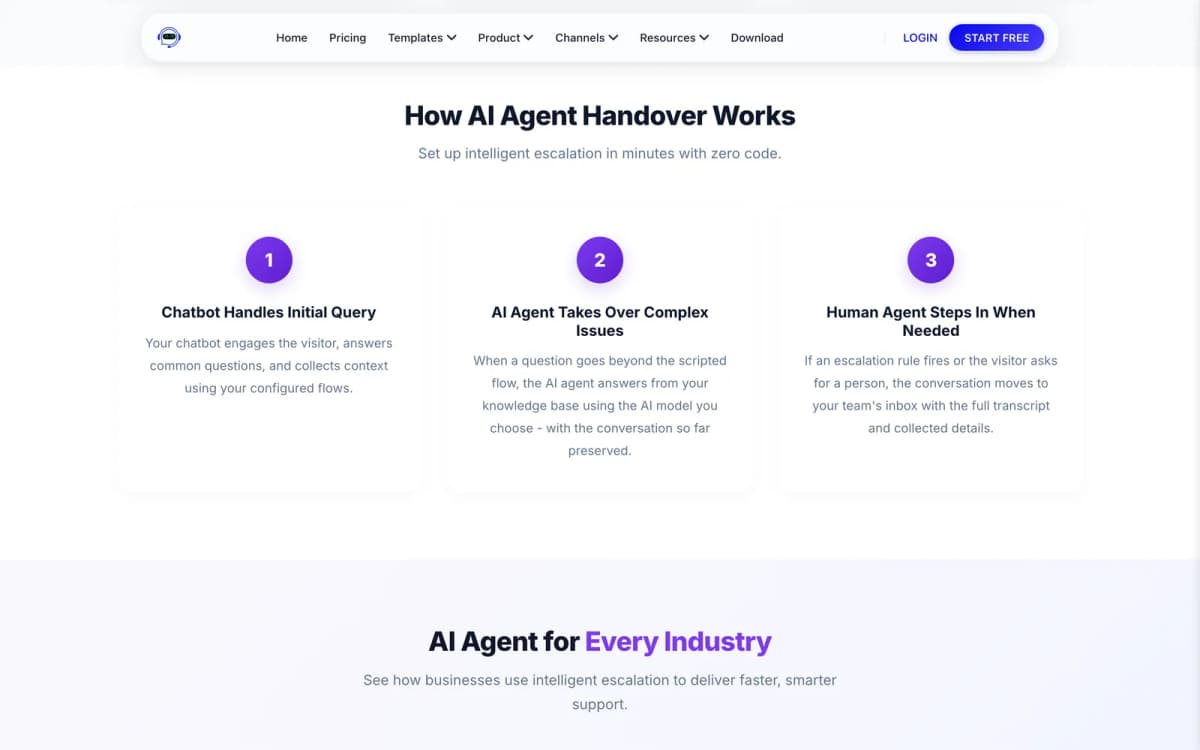
The flow answers common questions and collects context: a name, an email, the reason for the chat.
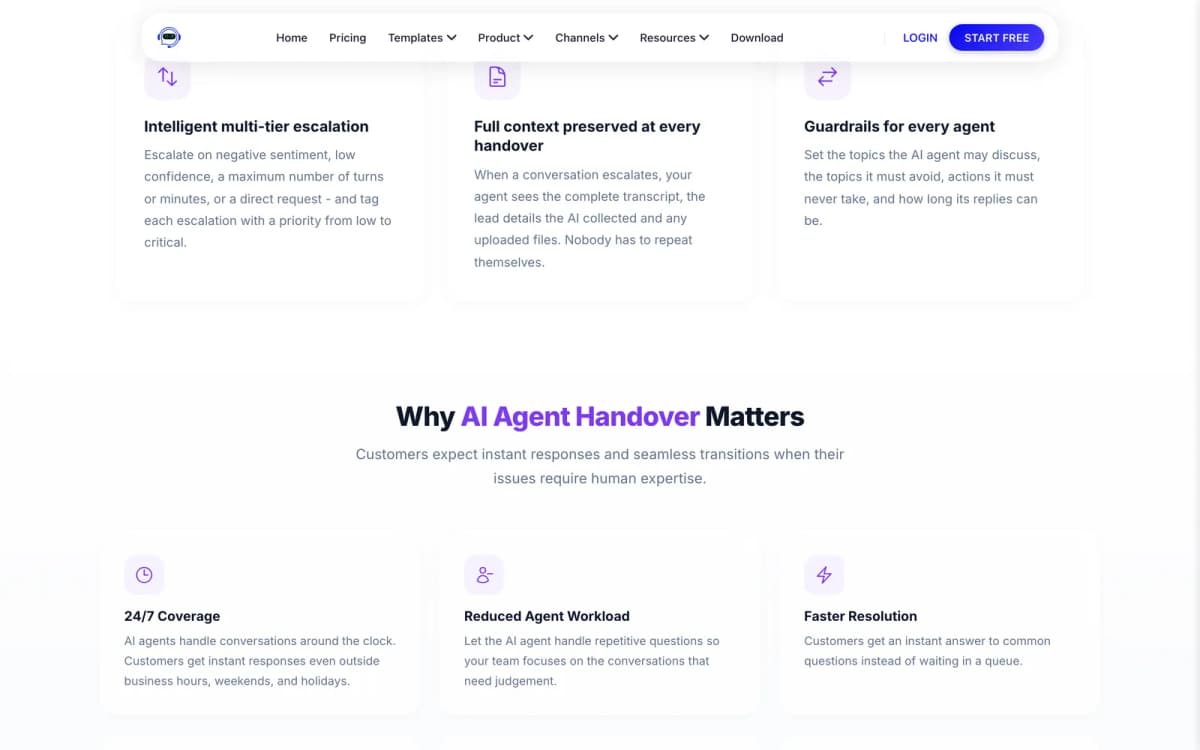
When a question goes beyond the flow, an AI agent answers from the business's own knowledge: its website, documents, Q&A pairs and help articles. The agent works inside guardrails the business sets: topics it may discuss, topics it must avoid, actions it must never take and how long its replies can be. Where the agent can call the business's own systems, any action that changes data can be set to need a person's approval.
Escalation rules decide when a person steps in: negative sentiment, low confidence, a maximum number of turns or minutes, or the visitor simply asking. Each escalation can carry a priority from low to critical. The person sees the full transcript, the details the bot collected and any uploaded files, so the customer never repeats themselves.
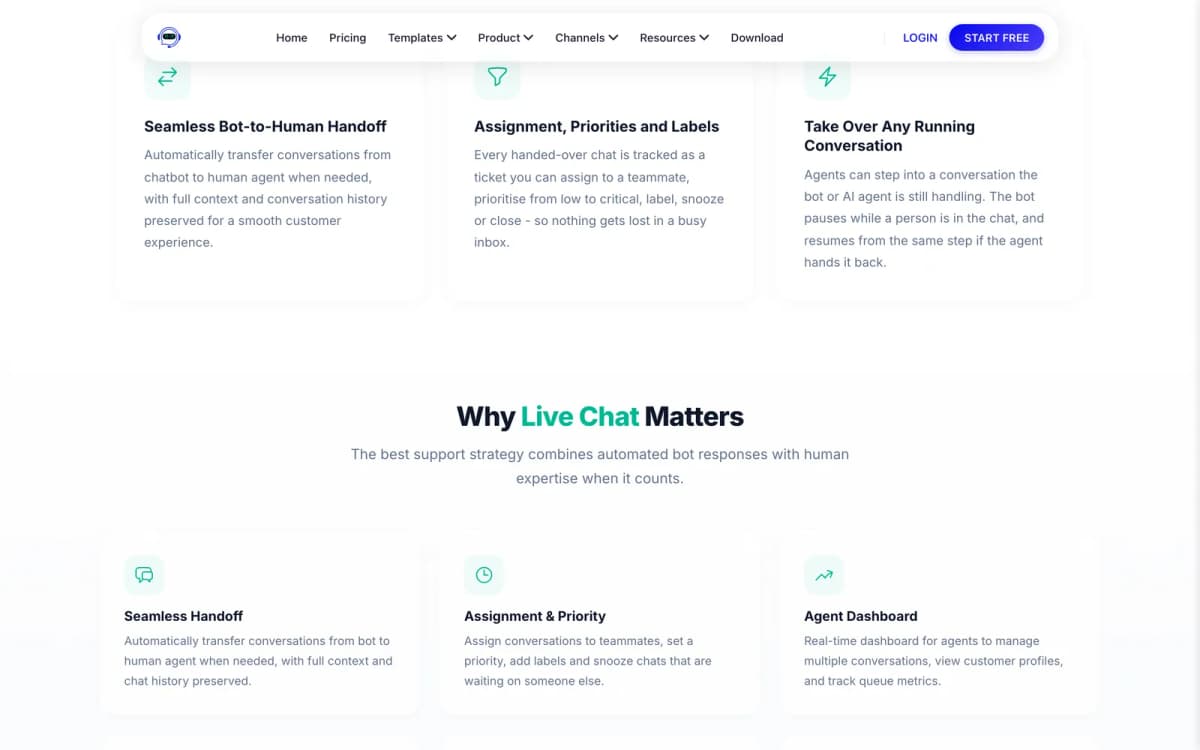
A person can also step into a chat the bot is still handling. The bot pauses while they are there, and if they hand the chat back, it carries on from the same step. Handed-over chats become tickets that can be assigned, prioritised, labelled, snoozed and closed.
Chapter 3
Many chatbot products choose the AI vendor for their customers and fold its cost into per-message pricing. ConferBot does the opposite: the AI model provider is a setting on each bot, the business brings its own API key, and changing provider does not mean rebuilding the flow.
The product's model page groups the 21 supported providers by where they develop and host their models, across the United States, China, France, Canada and Singapore, and also supports running a self-hosted model on hardware the business controls. That grouping reflects four reasons a business actually picks one:
Keeping the model behind a setting is also what lets the product keep up as models change, without asking customers to rebuild anything.
Conversation steps are nodes on a canvas, connected by drag and drop with a live preview, so a bot can be built and changed without code.
Ready-made flows grouped by industry, from booking and scheduling to e-commerce and education, each with a greeting, qualifying questions, a capture step and a handoff that can be reworded and published.
The same flow runs as a website widget and on WhatsApp Business, Facebook Messenger, Instagram DMs, Telegram, Discord, Slack, LINE and Microsoft Teams.
Chats from all channels land in one inbox; a person can take over from the bot, and chats can be assigned, prioritised and labelled.
An AI agent answers from the business's own knowledge inside set guardrails and hands over on sentiment, confidence, turn count or time, passing the full transcript and any lead details.
Each bot can run on a different AI provider, from the major model makers, using the customer's own API key.
The bot answers from the business's own help articles and documents rather than only from scripted replies.
A free plan, then Starter, Pro and Business tiers priced per workspace, adding more chats, bots and seats, webhooks and API access, white-labelling and SSO.
Beyond the messaging channels, the same bot installs on common website builders and store platforms, and inside React Native, Flutter, Android and iOS apps through SDKs.
Conversations, completion and drop-off points, conversion goals and per-channel comparison in one dashboard, with CSV export and integrations to send conversation data on to a CRM.
Real screens · 15
Yes. An agent can take over any running conversation from the shared inbox. The bot pauses while the person is in the chat, and if the agent hands it back, the bot carries on from the same step of the flow.
Yes. The AI agent escalates on negative sentiment, low confidence, a set number of turns or minutes, or a direct request, and the person who picks it up sees the whole transcript and any lead details the bot collected.
Each bot chooses its own provider. The AI models page lists 21 models from the major providers, and teams bring their own API key, so model usage is billed by the provider rather than bundled into per-message pricing.
The website widget and messaging channels including WhatsApp Business, Facebook Messenger, Instagram DMs, Telegram, Discord, Slack, LINE and Microsoft Teams. The same flow runs on each, and replies come back to one inbox.
 Featured
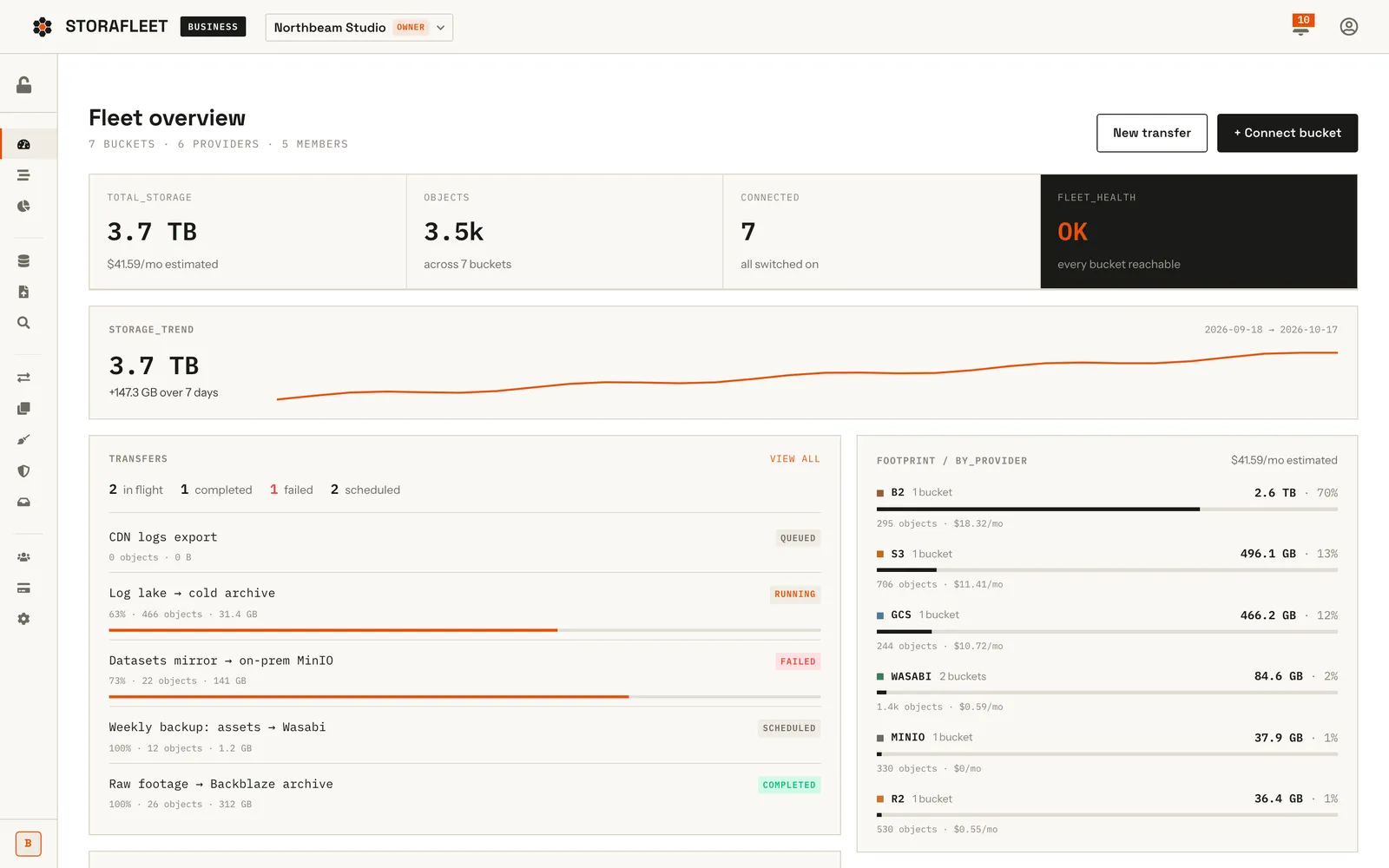
Storafleet is CountryDevs' own SaaS control plane for object storage. Teams connect buckets they already own on 50+ providers, including AWS S3, Cloudflare R2, Backblaze B2, Wasabi and MinIO, then browse, migrate, search, secure and cost-check them from one console.
 Featured
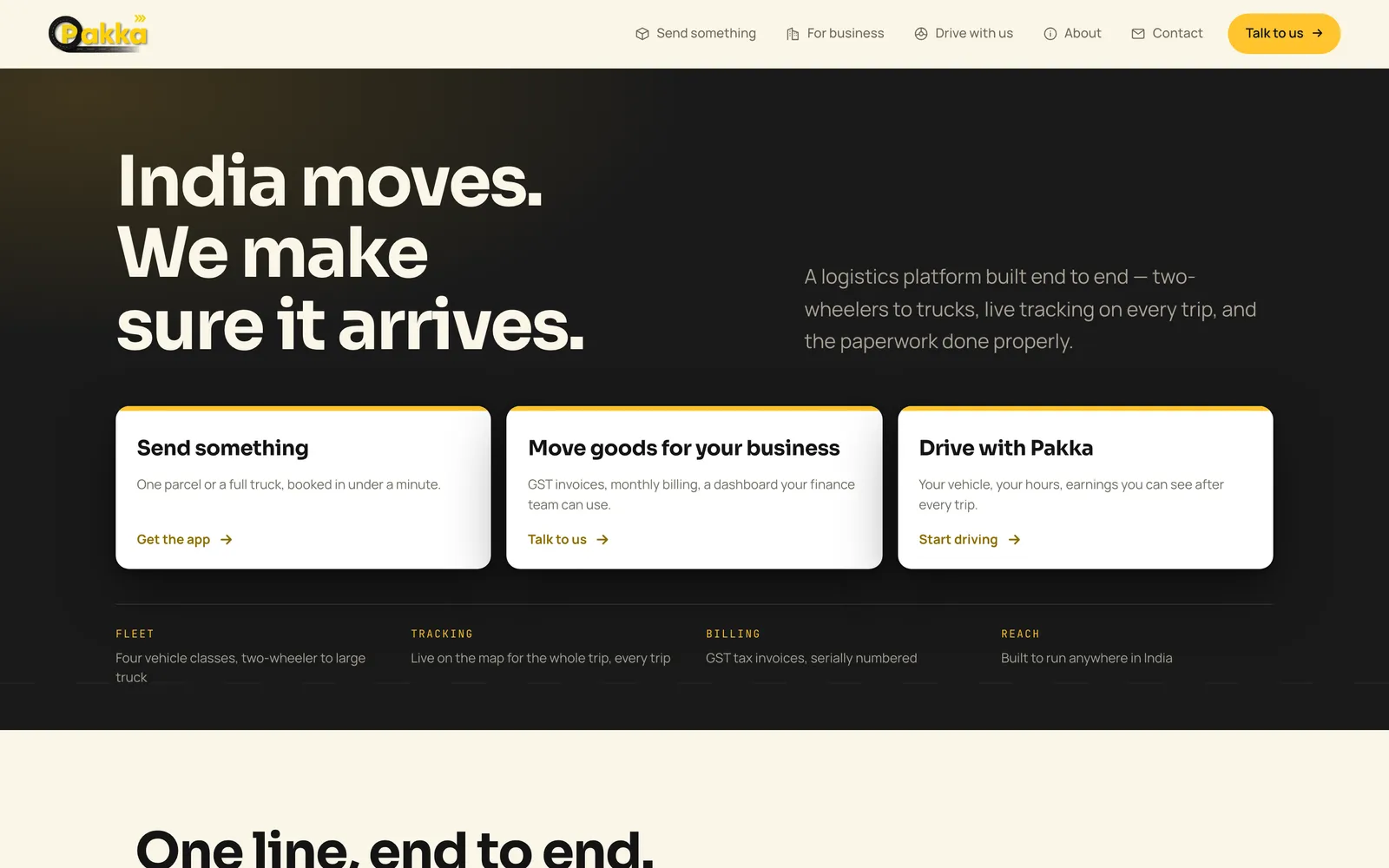
Pakka Logistics is an on-demand goods delivery platform for India. We built all of it: Android apps for customers and drivers, a business portal, an operations console and the website. The web platform is live and both Android apps are on Google Play; the two iPhone apps are in App Store review.
 Featured
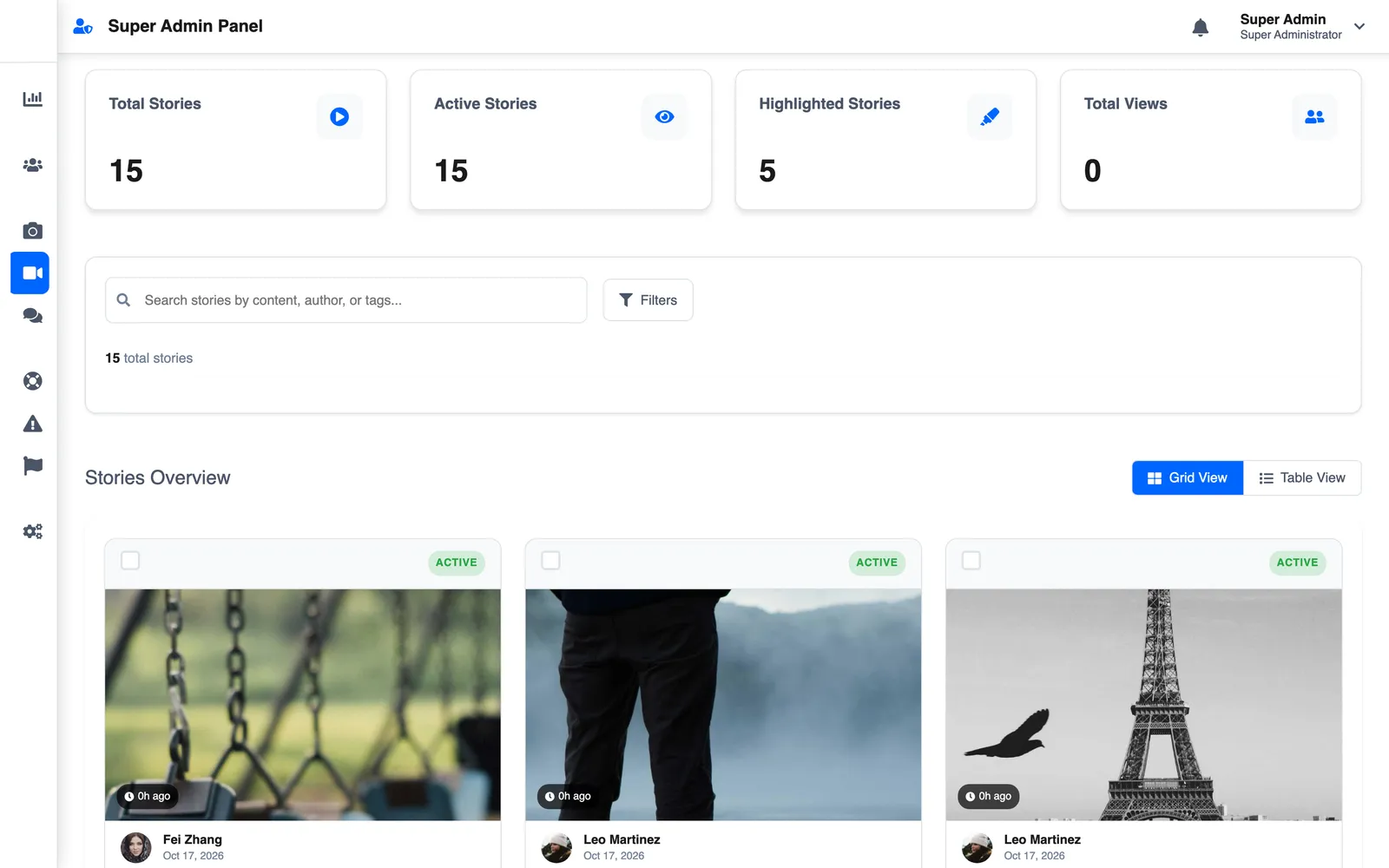
LetSlic, listed on Google Play as Slic, is a social app for photo posts, 24-hour stories and real-time chat with group moderation. We built it for Slic Solutions Private Limited: the React Native app, two Node.js APIs, the superadmin console and the website, plus Premium and ads.
Tell us what you're trying to ship and which project here is closest to it. We'll reply with the questions that shape the plan, then start with a two-week Discovery Sprint, so you see the screens and the plan before any code is written.
Not ready for a full build? Start with a Discovery Sprint, or get a code audit of an app someone else built. See how a project runs with us.
We work from Bengaluru with clients in India and abroad: app development in Bangalore, for businesses in the UAE and for businesses in the UK.