All projects
Portfolio
Built — not yet launched

Damir Pehar — UX Designer Portfolio Website

A personal portfolio website for Damir Pehar, a UX designer in Chicago. We built the home, work, about and contact pages and three long-form case studies on a customised GSAP template, with scroll-driven animation and a WebGL hover effect. It is complete, with no public URL on record.

For Damir PeharMar–Jul 2026
  • Responsive website
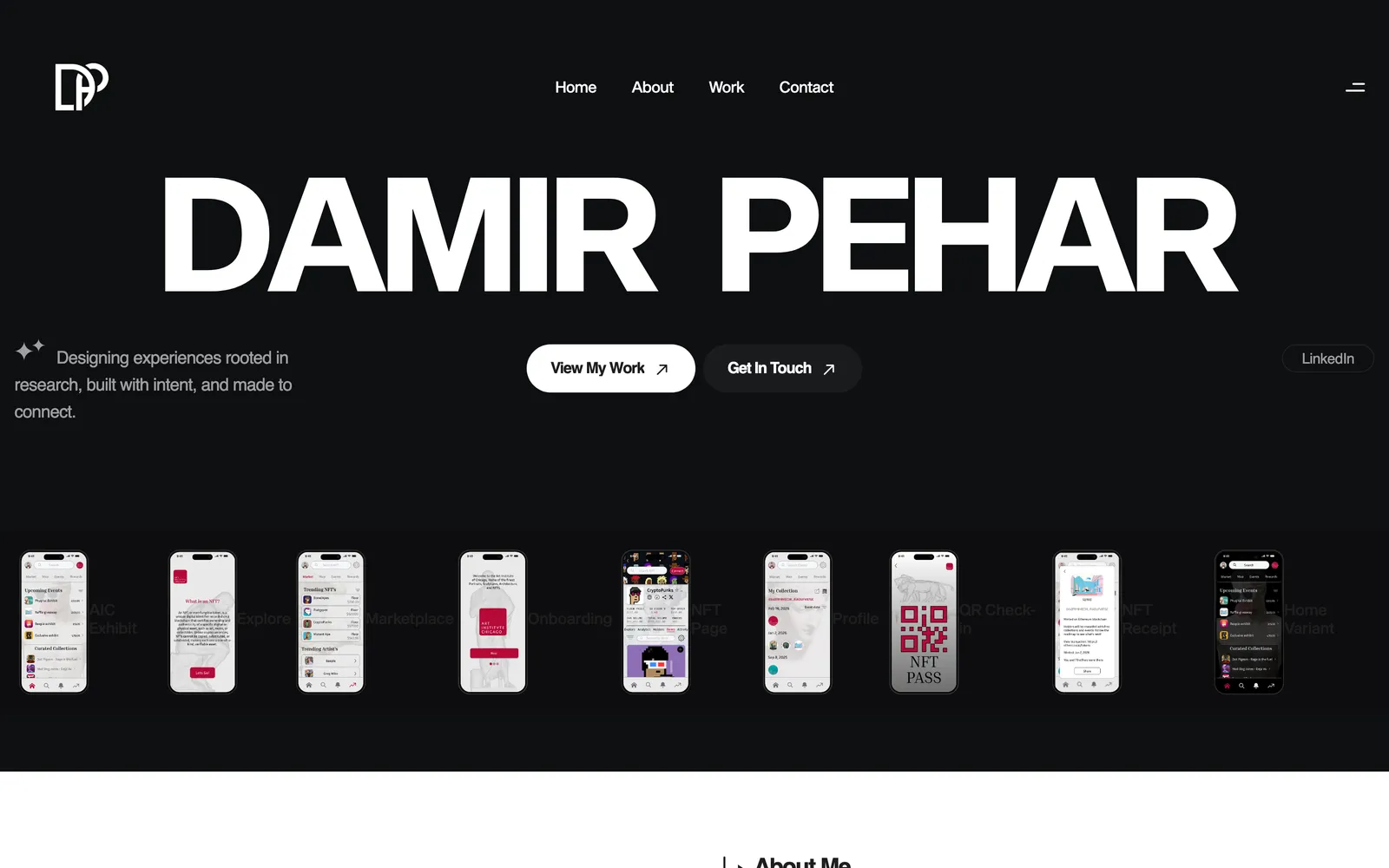
Black home page with 'DAMIR PEHAR' in huge white type, View My Work and Get In Touch buttons and a row of phone screen mock-ups.

Overview

Damir Pehar is a UX designer and builder based in Chicago whose work is research-driven. He needed a portfolio that shows that process, not just finished mock-ups, and that feels as considered as the work it presents.

We built a seven-page static site: a home page, a work index with discipline filters, three case-study pages, an about page and a contact page. The case studies cover an academic project for the Art Institute of Chicago, product design for WeReceipt, a startup's receipt and budgeting app, and a responsive website redesign for Monk's Pub, an independent Chicago craft-beer pub. The site is built on a GSAP-based HTML template that we customised heavily, with our own section layouts added in a separate namespace.

The first build went up in March 2026, with rounds of changes in March, May and July: requested layout and responsiveness fixes, a refreshed About page, and Monk's Pub images re-exported as WebP to keep their transparency. The site is finished, but we found no production URL for it, so it is listed here as built rather than live.

The challenge

A UX portfolio is judged on the same things it claims to be good at. Long case studies easily turn into walls of text or into a run of identical blocks, and three projects of very different kinds — an academic museum app, a startup product and a website redesign — still had to read as one body of work.

The site also had to stay light to maintain: plain HTML, CSS and JavaScript with no backend, motion that works on a phone, and room for the designer to keep adding projects.
The solution

Before building the case-study pages we wrote a pattern library. Content types that appear in every case study — research methods, the problem, results — reuse the same layout across all three pages, so a reader learns the shape once. Within a single page, no two sections share a pattern. The library also fixes the rules: only the template's existing colour tokens and fonts, the existing animation hooks with no new JavaScript, and no boxed cards — sections are separated by type, images, rules and whitespace.

Motion comes from GSAP with ScrollTrigger and ScrollSmoother for scroll-tied reveals and character animation, a three.js hover effect on the selected-work list, and Swiper for sliders. Layouts follow the template's Bootstrap breakpoints down to phone width, with our additions kept in their own class namespace at the end of the stylesheet so template updates stay manageable.

The impact

The finished site has seven pages, including three long-form case studies, and runs as a static site with no backend. It is complete and has been through several rounds of changes requested by the designer, the last in July 2026.

We have no public URL on record and no traffic or enquiry figures, so we do not report any. What it shows is how we approach a portfolio build: a shared pattern system first, then pages that follow it.

Features

What we built into Damir Pehar

Oversized wordmark hero

The home page opens on a large name wordmark, a one-line positioning statement and calls to action above a strip of phone mock-ups taken from the case studies.

Selected work with a WebGL hover

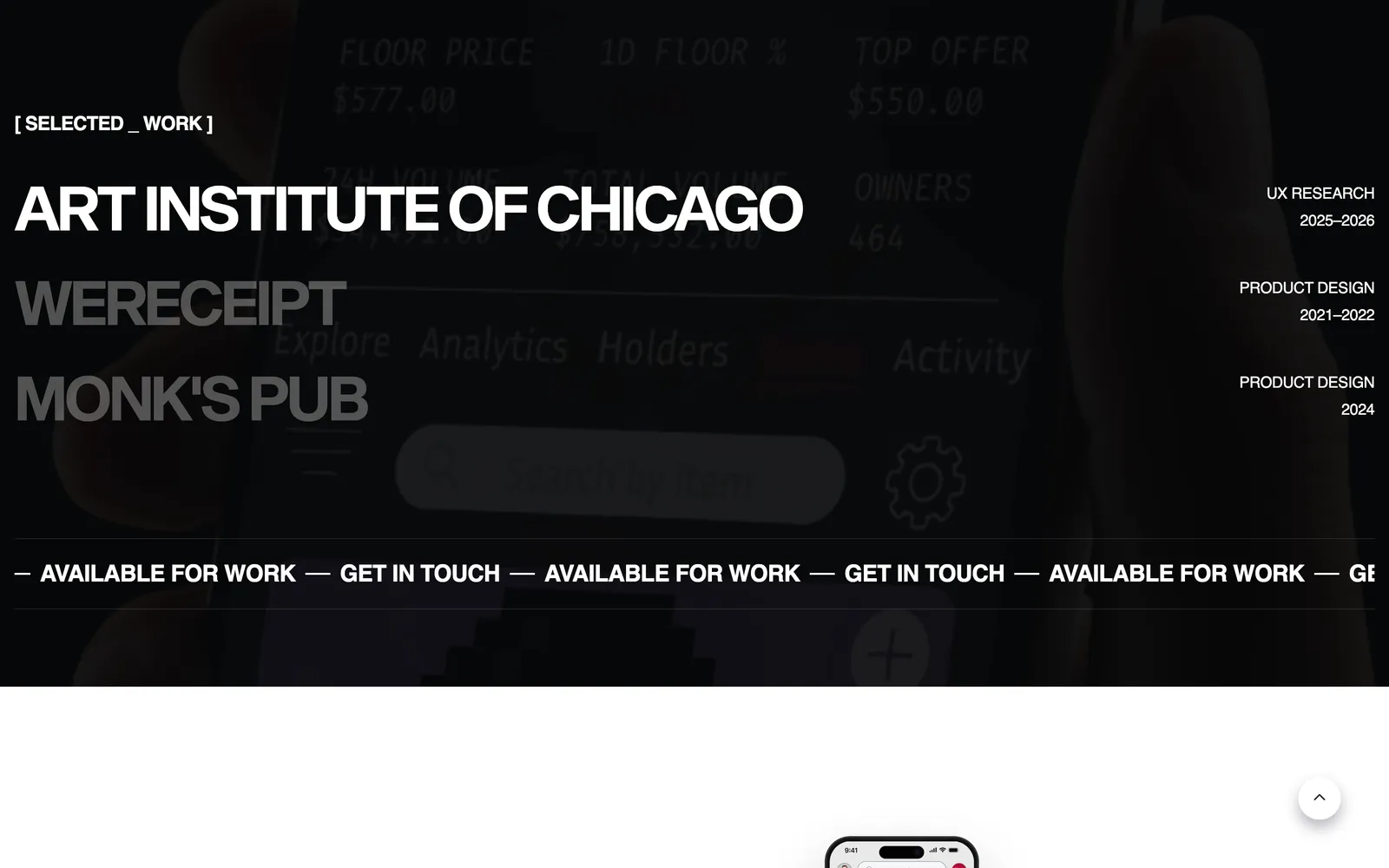
The home page lists the three case studies in large type with discipline and year, and a three.js hover effect brings up each project's image behind the list.

Work index with discipline filters

The work page filters projects by UX research or product design, with a card for each case study.

Three long-form case studies

Separate pages for the Art Institute of Chicago (an academic project), WeReceipt and Monk's Pub, each with client, role, tools and year set out under the title.

A shared pattern library

Research methods, problem and results sections reuse one layout across all three case studies, while no two sections on the same page repeat a pattern.

Scroll-driven motion

GSAP ScrollTrigger and ScrollSmoother drive fade-ins, character-split headings and scroll-tied horizontal sections, using the template's existing animation hooks.

Responsive to phone width

Every page reflows on the template's Bootstrap breakpoints, with case-study metadata stacking into a single column on a phone.

By the numbers
7
Pages built, including three long-form case studies
Screens

What Damir Pehar looks like

Dark section listing ART INSTITUTE OF CHICAGO, WERECEIPT and MONK'S PUB in large type with role and year labels on the right.
The selected-work index on the home page: three case studies listed in large type with discipline and year, over a WebGL hover-image background.
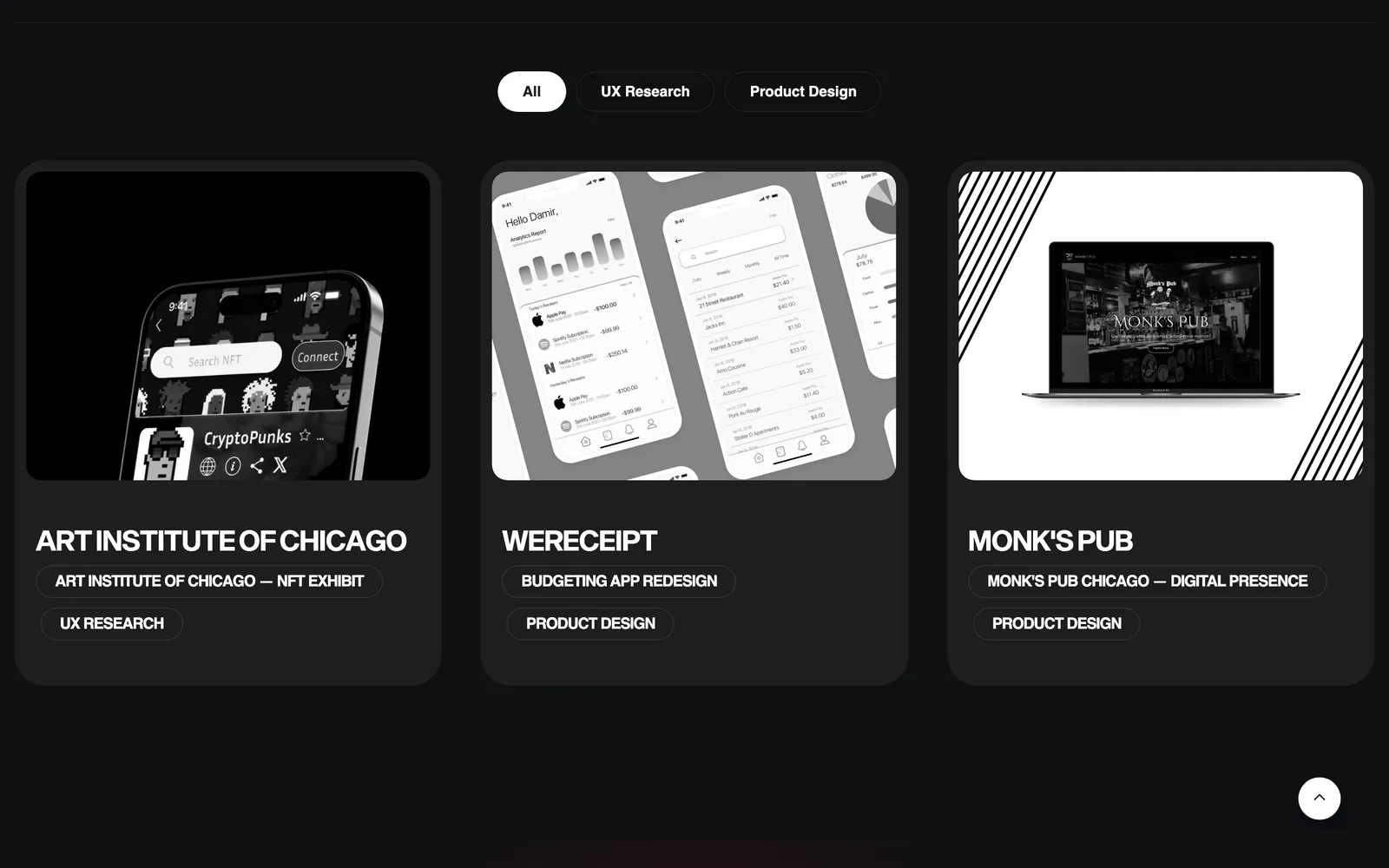
Work page with All / UX Research / Product Design filter pills and three project cards showing phone and laptop mock-ups.
The work page with discipline filters (UX research, product design) and a card for each of the three case studies.
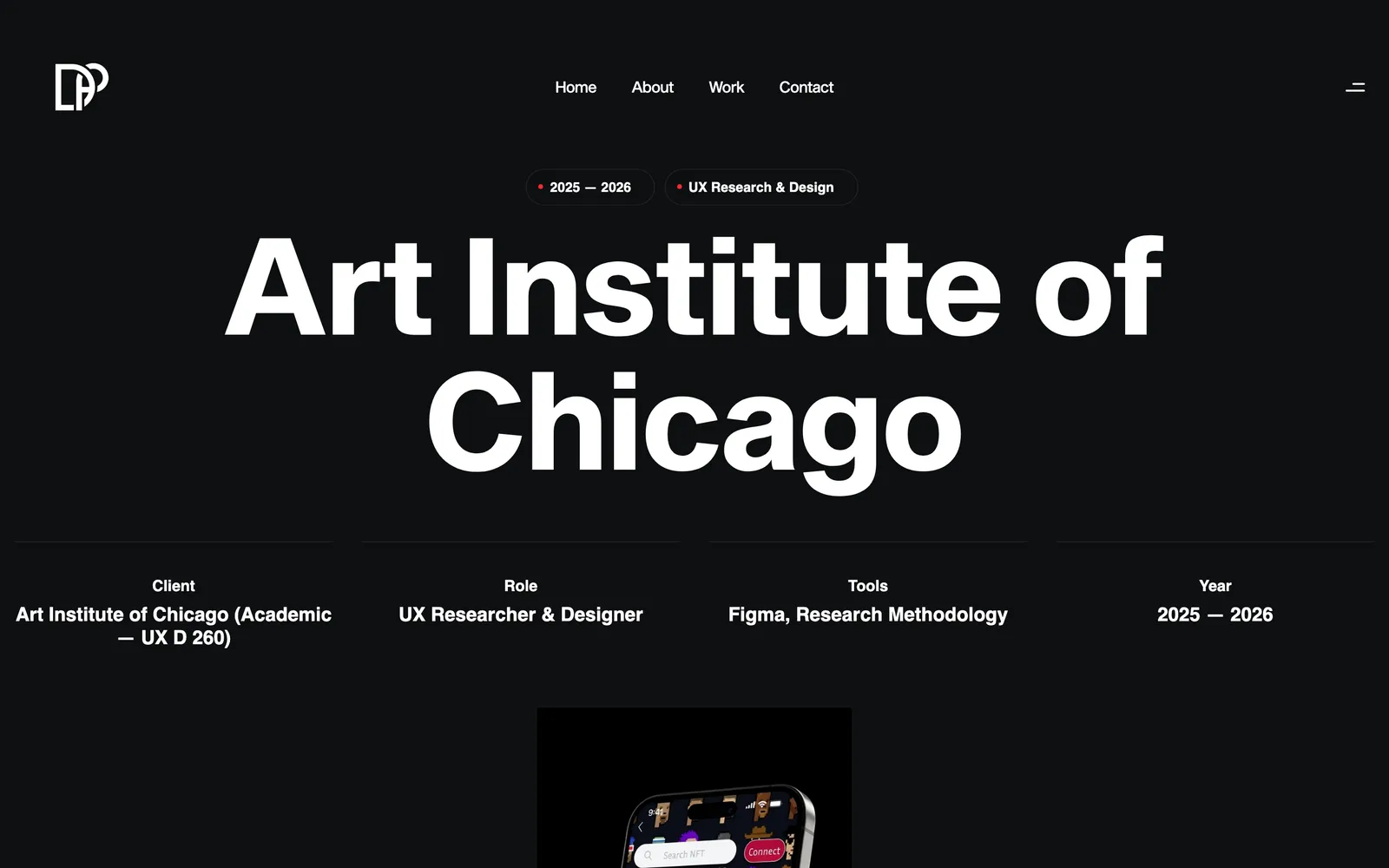
Case study hero titled 'Art Institute of Chicago' with year and discipline pills, a client / role / tools / year row and the top of a phone mock-up.
Opening of the Art Institute of Chicago case study, an academic (UX D 260) UX research and design project, with client, role, tools and year set out under the title.
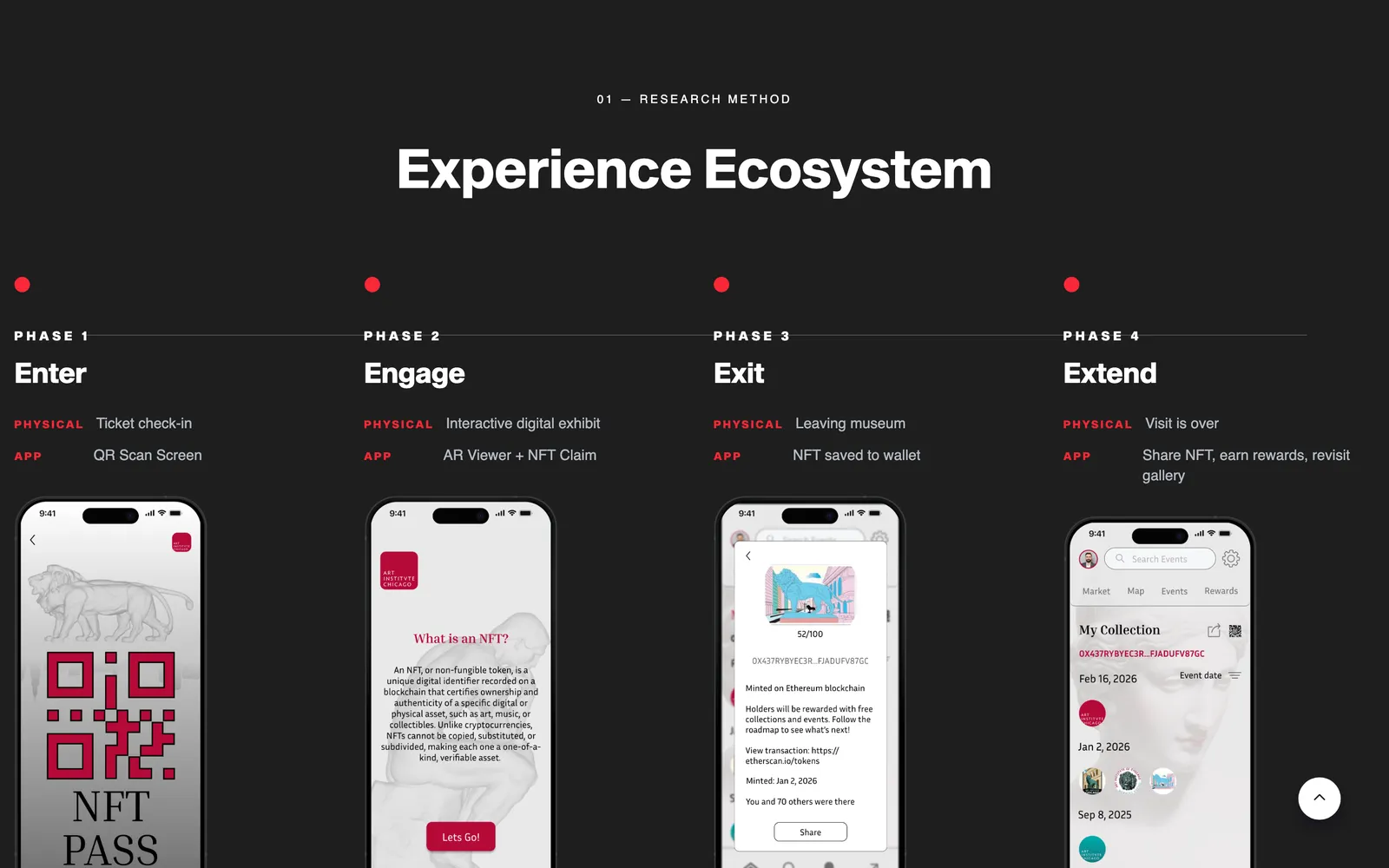
Section titled 'Experience Ecosystem' with four journey stages, each paired with a phone screen mock-up.
The AIC case study's experience-ecosystem section, mapping the visitor journey from before the visit to after it onto the app screens that support each stage.
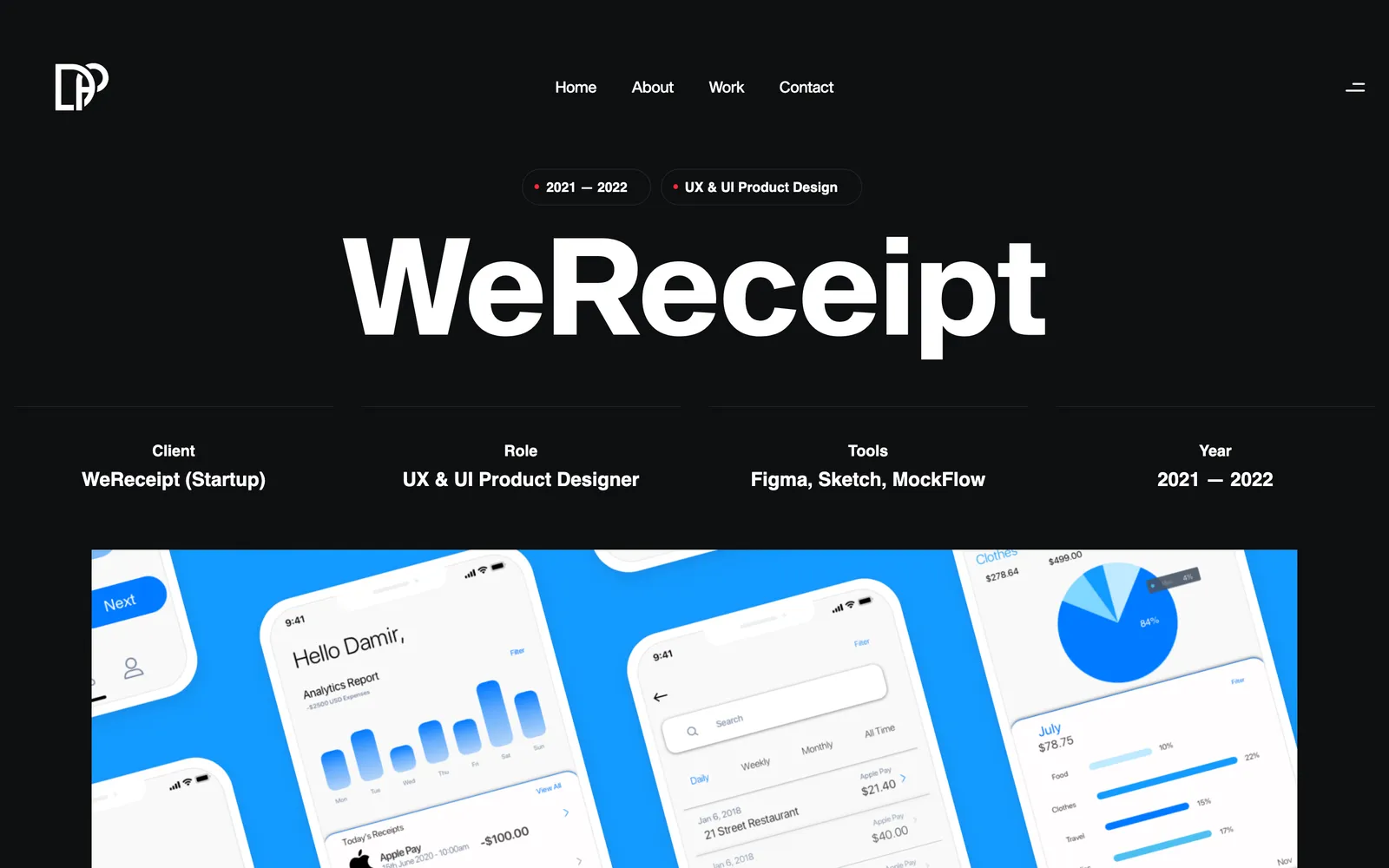
Case study hero titled 'WeReceipt' with a client / role / tools / year row above a blue banner of tilted app screens showing spending analytics.
Opening of the WeReceipt case study, UX and UI product design for a startup's receipt and budgeting app, with client, role, tools and year under the title.
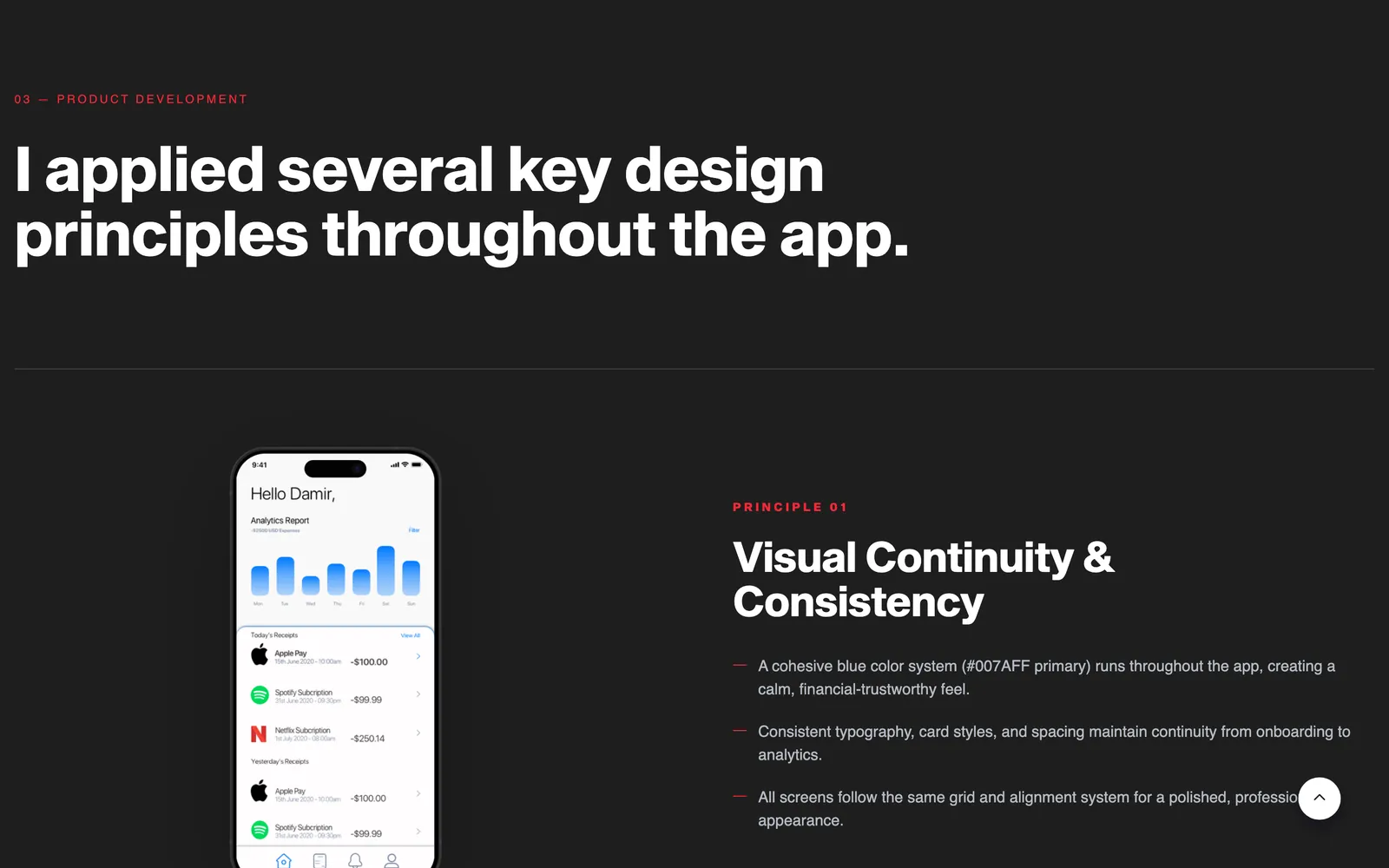
Section headed 'I applied several key design principles throughout the app' with annotated app screens.
The WeReceipt case study's design-principles section, explaining how each principle shaped the app's screens.
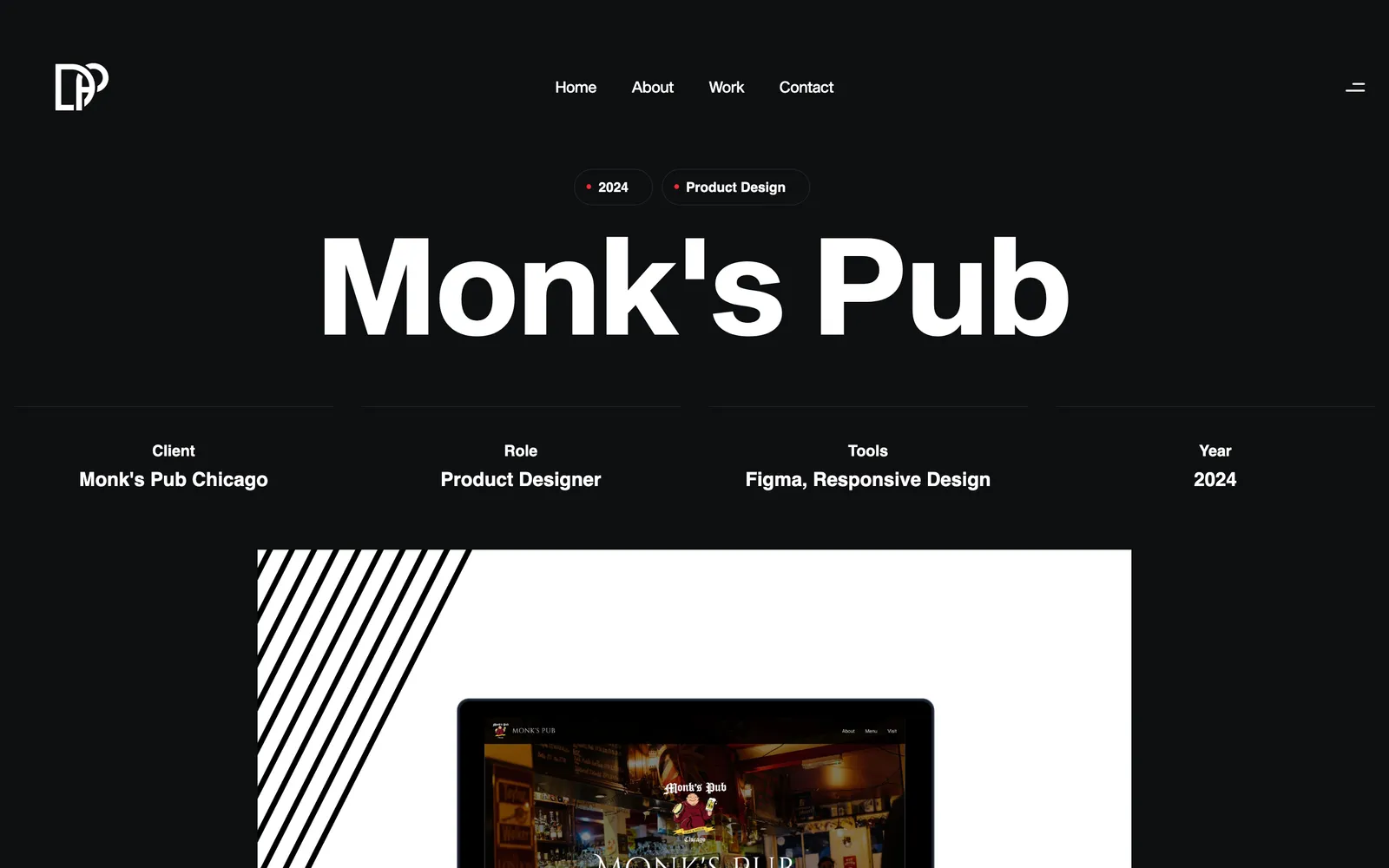
Case study hero titled 'Monk's Pub' with a client / role / tools / year row above a laptop mock-up of the redesigned pub website.
Opening of the Monk's Pub case study, a responsive website redesign for an independent craft-beer pub in Chicago, with client, role, tools and year under the title.
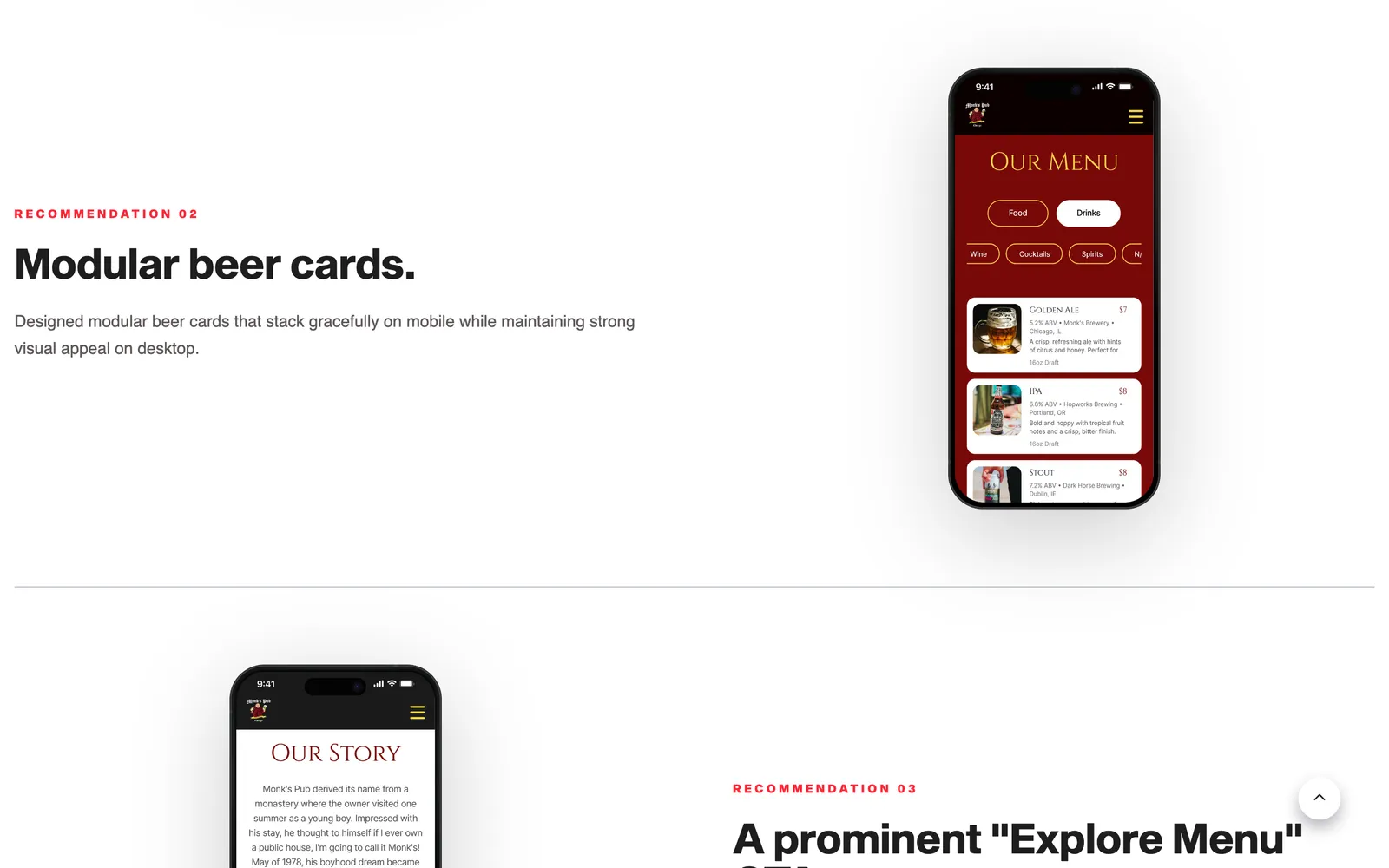
Section 'Recommendation 02, Modular beer cards' with explanatory text beside a phone mock-up of the pub's red 'Our Menu' drinks page.
One of the Monk's Pub case study's design recommendations: modular beer cards for the drinks menu that stack on mobile, shown on a phone mock-up of the redesigned site.
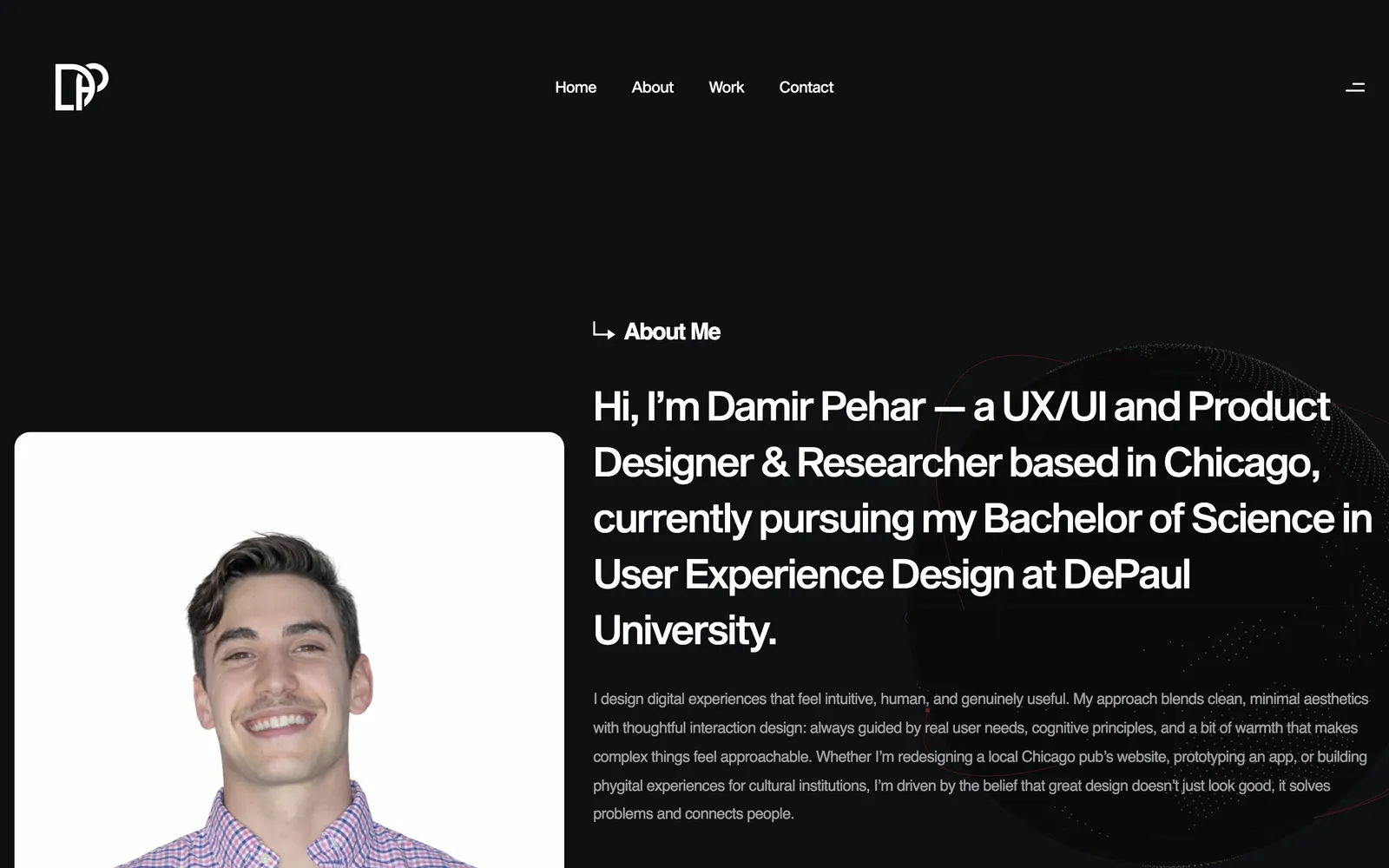
About page with a portrait photo on the left and a large introductory headline and paragraph on the right, white on black.
The about page: a portrait beside an introduction to the designer's UX/UI, product design and research focus.
App screens

Inside the mobile app

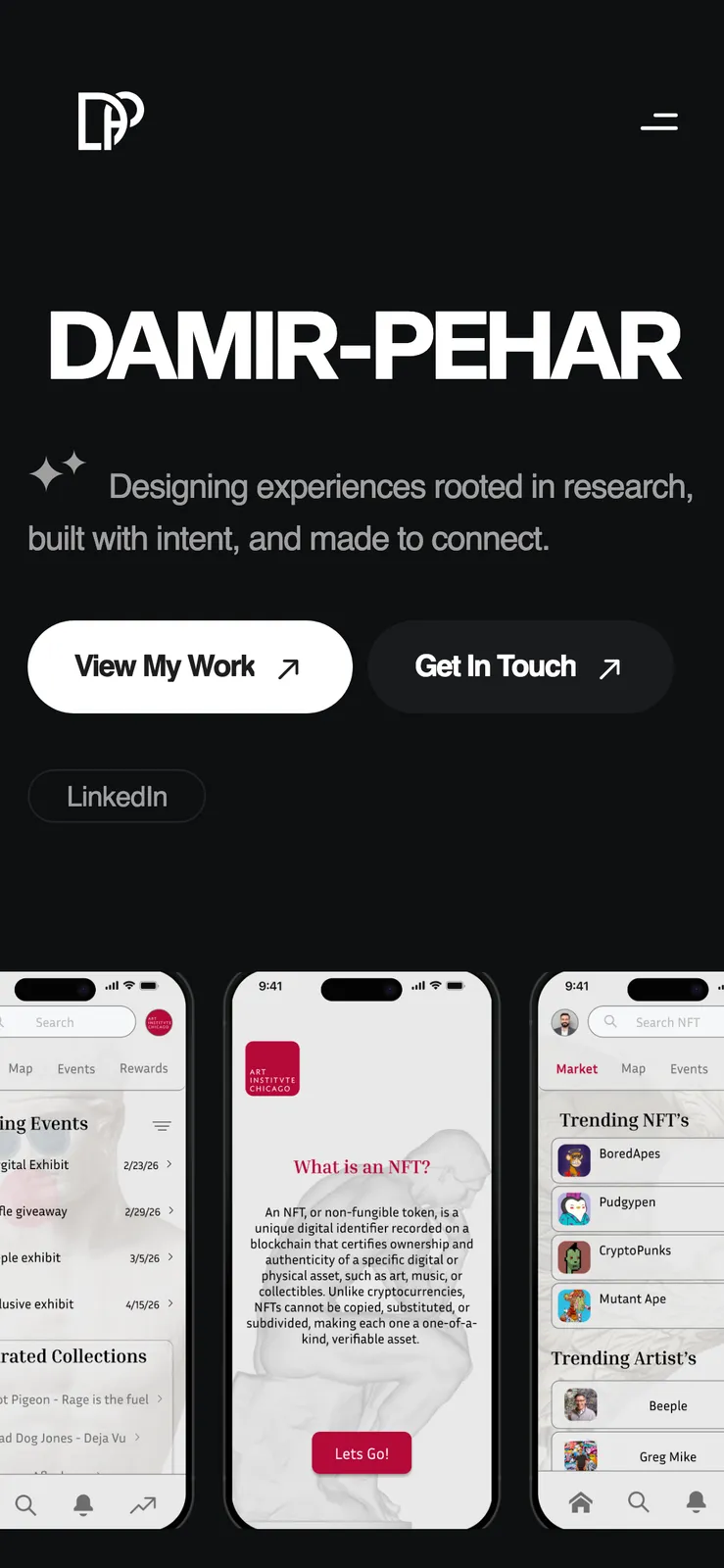
Mobile home page with the 'DAMIR-PEHAR' wordmark, intro text, View My Work / Get In Touch buttons and three phone mock-ups along the bottom.
The home hero on a phone: the wordmark, positioning line and calls to action reflowed for a narrow screen, above a strip of case-study app screens.
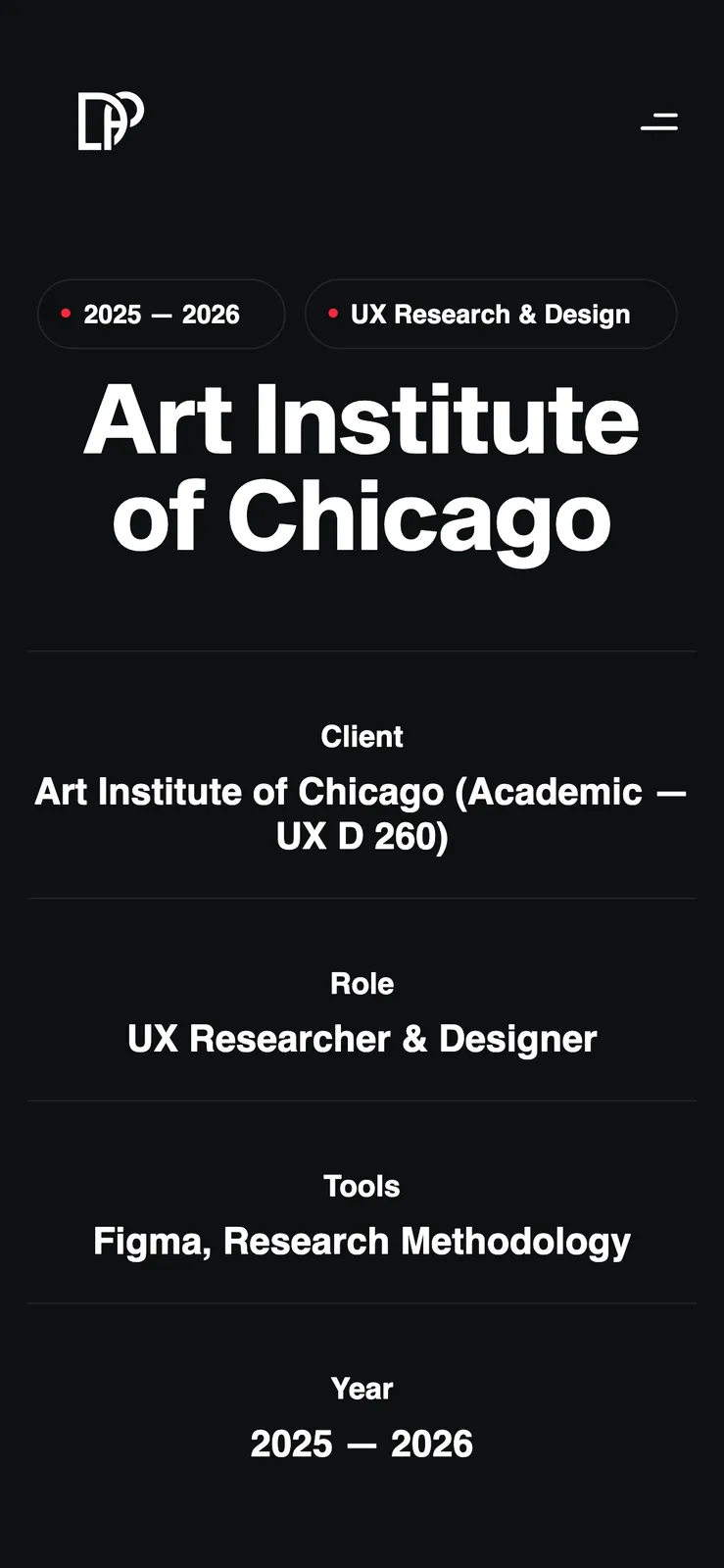
Mobile view of the Art Institute of Chicago case study hero with year and discipline pills, the title and stacked client, role, tools and year rows.
The Art Institute of Chicago case study opening on a phone, with the project meta stacked into a single column.
Project details
Tech stack
HTML5CSS3JavaScriptGSAP (ScrollTrigger, ScrollSmoother)three.jsSwiperBootstrap
Timeline & team
Mar–Jul 2026
FAQ

Questions about this project

How did you keep the three case studies on Damir Pehar's portfolio consistent?

We wrote a pattern library first. Sections that every case study has, such as research methods, the problem and results, use the same layout on all three pages, while no two sections on a single page repeat a pattern.

What powers the animation on the Damir Pehar portfolio site?

GSAP with ScrollTrigger and ScrollSmoother for scroll-tied reveals and split-text headings, a three.js hover effect on the selected-work list, and Swiper for sliders — all in a static HTML, CSS and JavaScript site with no backend.

More work

Other things we shipped

All projects
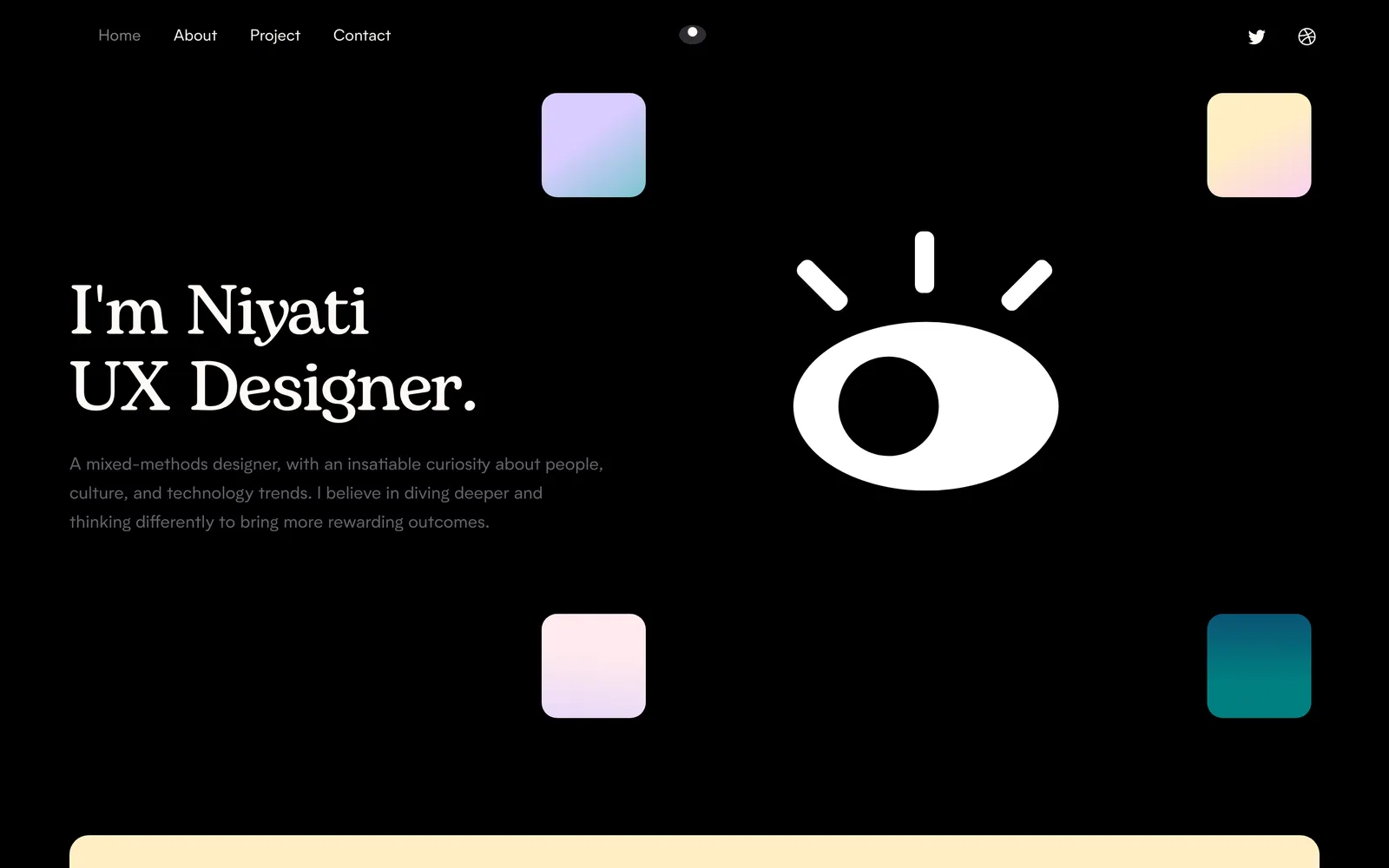
Niyati Tiwari UX designer portfolio hero on a black background
Portfoliofor Independent professionals

Portfolio Websites for Professionals — 17 Sites

Seventeen live one-page portfolio websites we built for independent professionals: a photographer, a cybersecurity researcher, developers, marketers, a content writer with a nursing background, a UX designer, an agronomist and more. Each is a static HTML, CSS and JavaScript site on Netlify.

HTML5CSS3JavaScriptjQuery+12
17Live portfolio sites in this collection
Case study
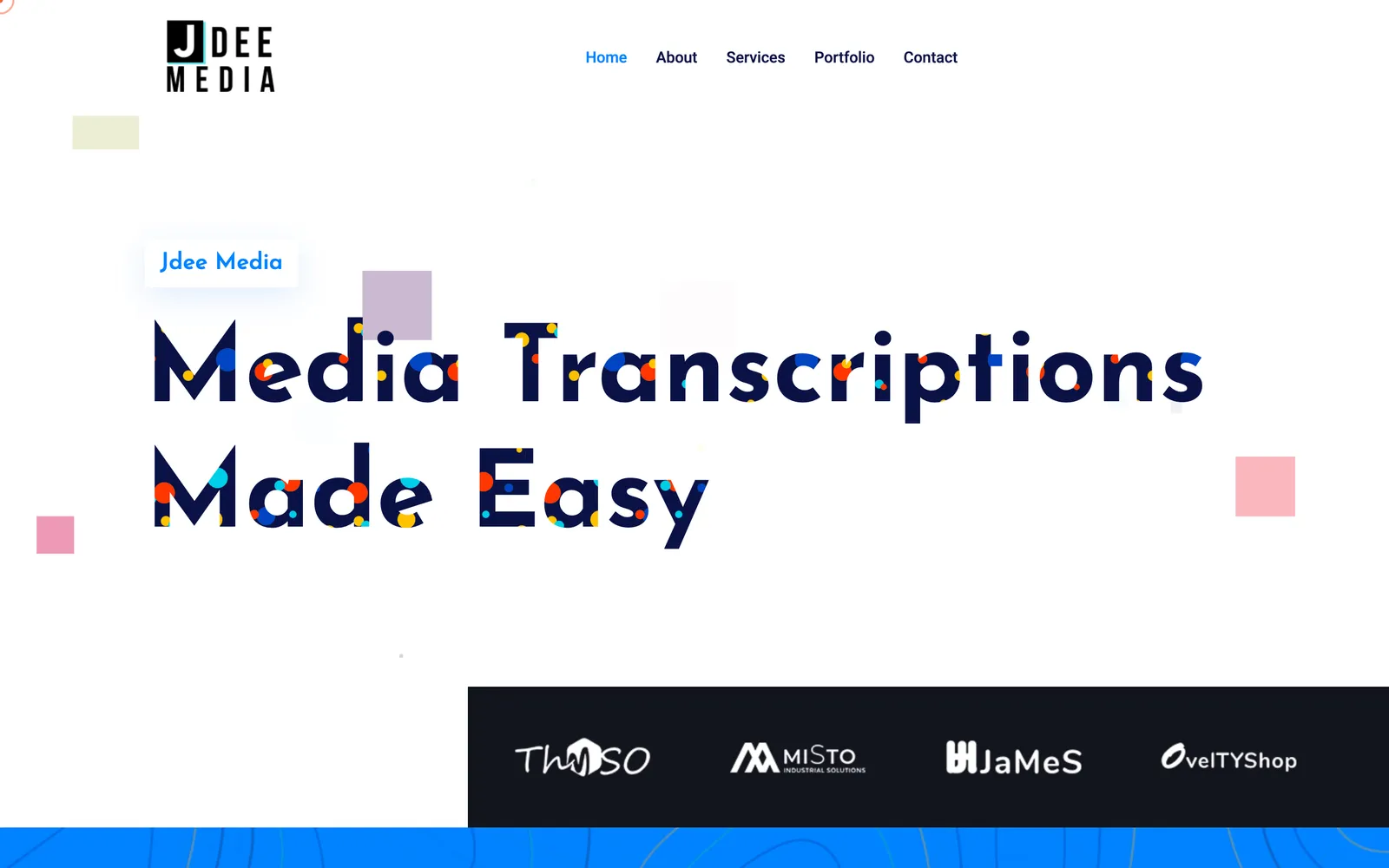
Jdee Media homepage hero reading Media Transcriptions Made EasyPrototype
Static Sitefor Jdee Media

Jdee Media — Transcription Service Homepage Design

A homepage design we built for Jdee Media, a media transcription service: a large display-type hero, cards for transcription, captioning and translation, and a closing call-to-action band. It never went live with final content; much of the body copy is still placeholder text.

HTML5CSS3JavaScriptSASS+1
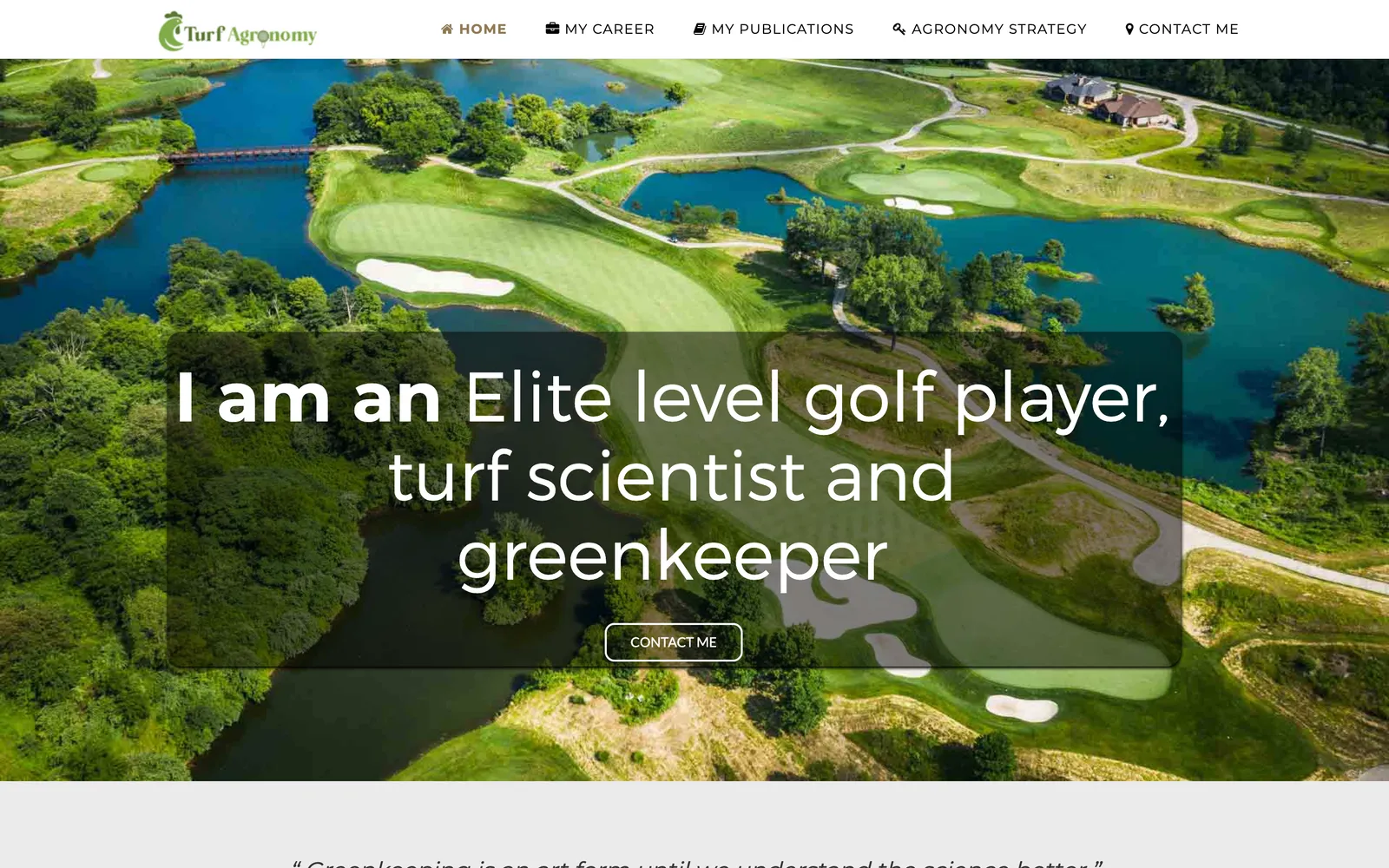
Turf Agronomy home page with an aerial golf course photo and the line I am an elite level golf player, turf scientist and greenkeeper
Static Sitefor Daniel Hahn (Turf Agronomy)

Daniel Hahn Turf Agronomy — Golf Agronomist Website

A five-page website we built for Daniel Hahn, a turfgrass agronomist and applied scientist who advises golf courses: a photo-led home page, a career timeline, a publications list, an agronomy strategy page and a contact form.

HTML5CSS3JavaScriptSASS+1
Got a project?

Let's build the
next one together

Tell us what you're trying to ship. We'll come back with a scope, a timeline, and a fixed price — usually within 48 hours.

Not ready for a full build? Start with a fixed-price Discovery Sprint, or get a code audit of an app someone else built.