How does LoudMouth keep cold email out of spam folders?
LoudMouth sends from the customer's own mailboxes, never a shared relay, so the engine's job is to protect each mailbox's reputation. Our June 2026 review found that the first send path sent real mail and stopped there. The DKIM record it told users to publish held a placeholder key, outgoing mail was unsigned, and the warmup and health logic existed but was never called, so a new mailbox could send at full volume on day one. We fixed both.
A real key per domain
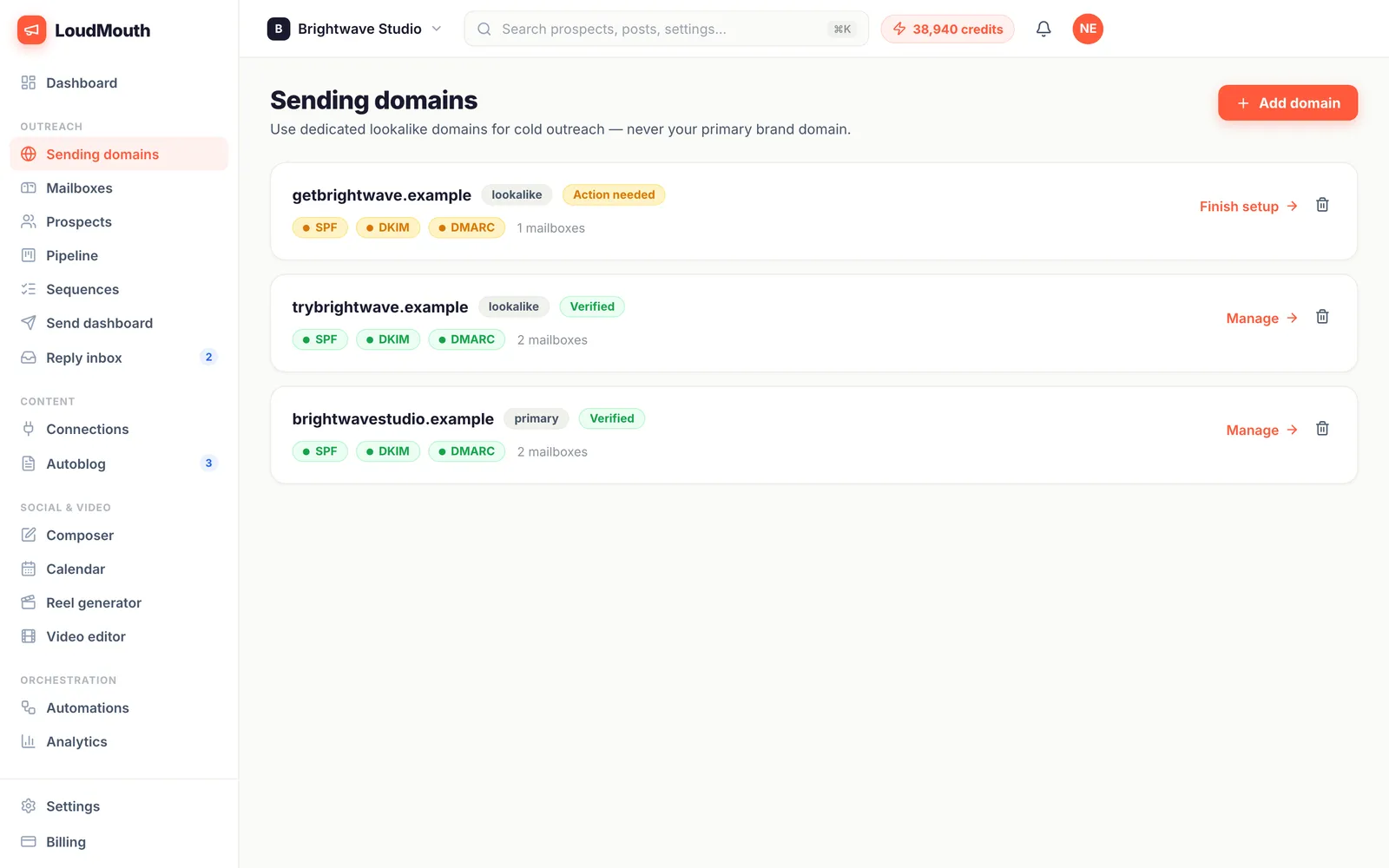
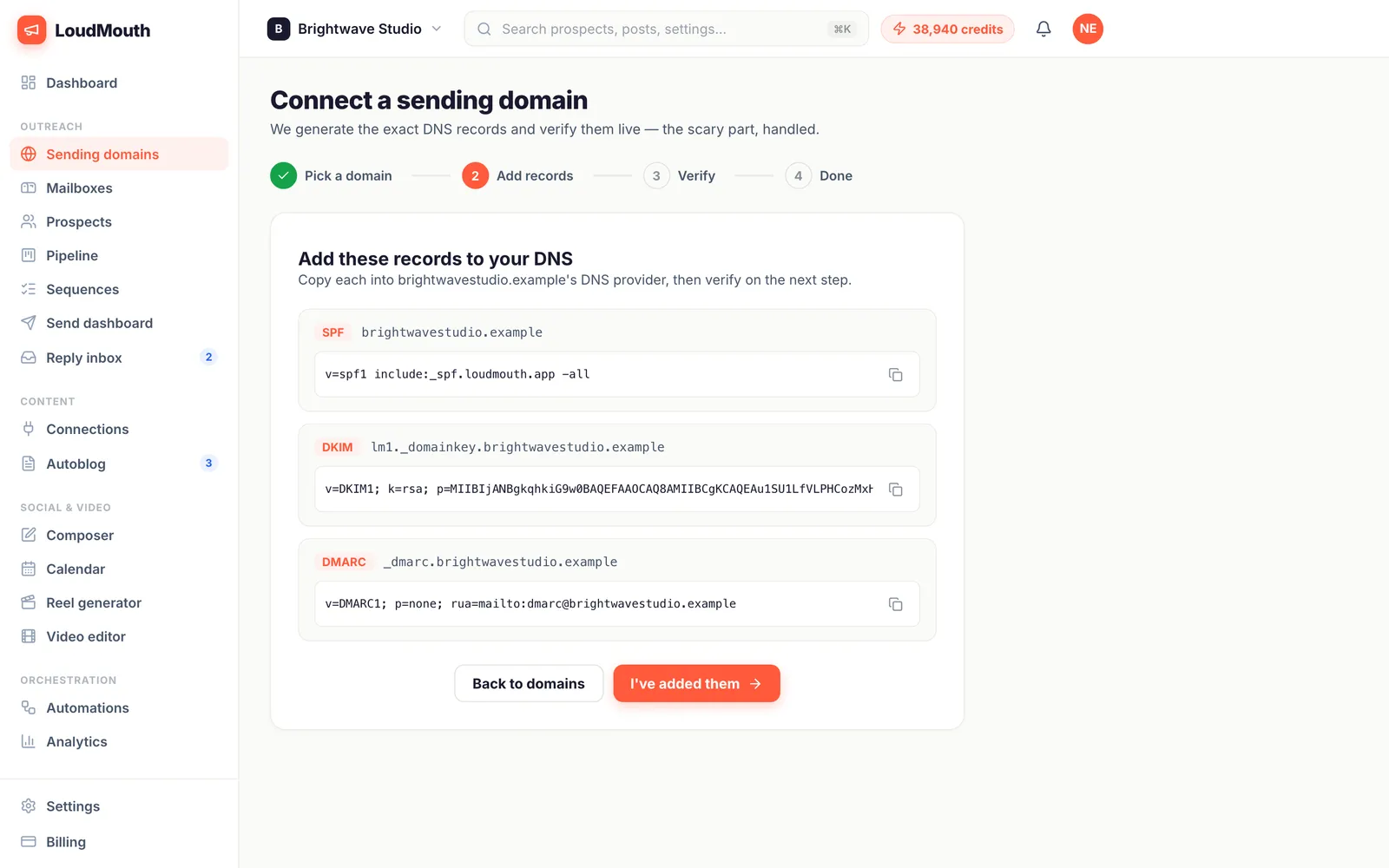
Adding a sending domain generates an RSA-2048 keypair. The public key goes into the DKIM record the setup wizard shows, beside SPF and DMARC. The private key is encrypted in the vault and never sent to the browser. SMTP mail is signed with it, and verification checks that the published p= value matches our key, not merely that some DKIM record exists.
Warmup, rotation and backoff
| Rule | Value |
|---|---|
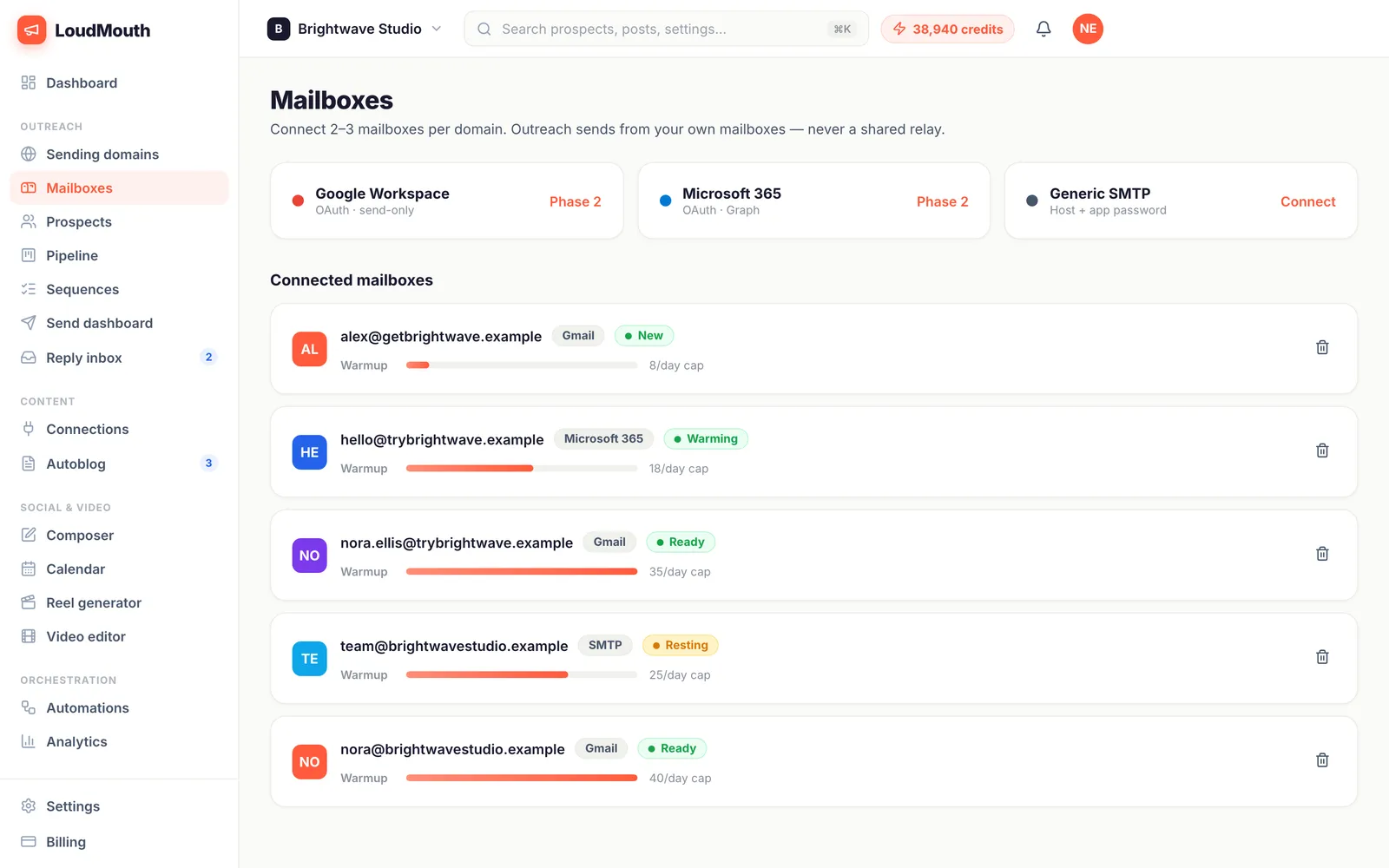
| New mailbox | 10 sends a day, then about +3 a day |
| Steady state | 35 a day, ±5 random jitter |
| Hard ceiling | 50 a day, in any state |
| Gap between sends | 30–180 seconds, random |
| 7-day bounce rate of 2% or more | daily cap halved |
| Complaint rate of 0.3% or more | mailbox rests for 7 days |
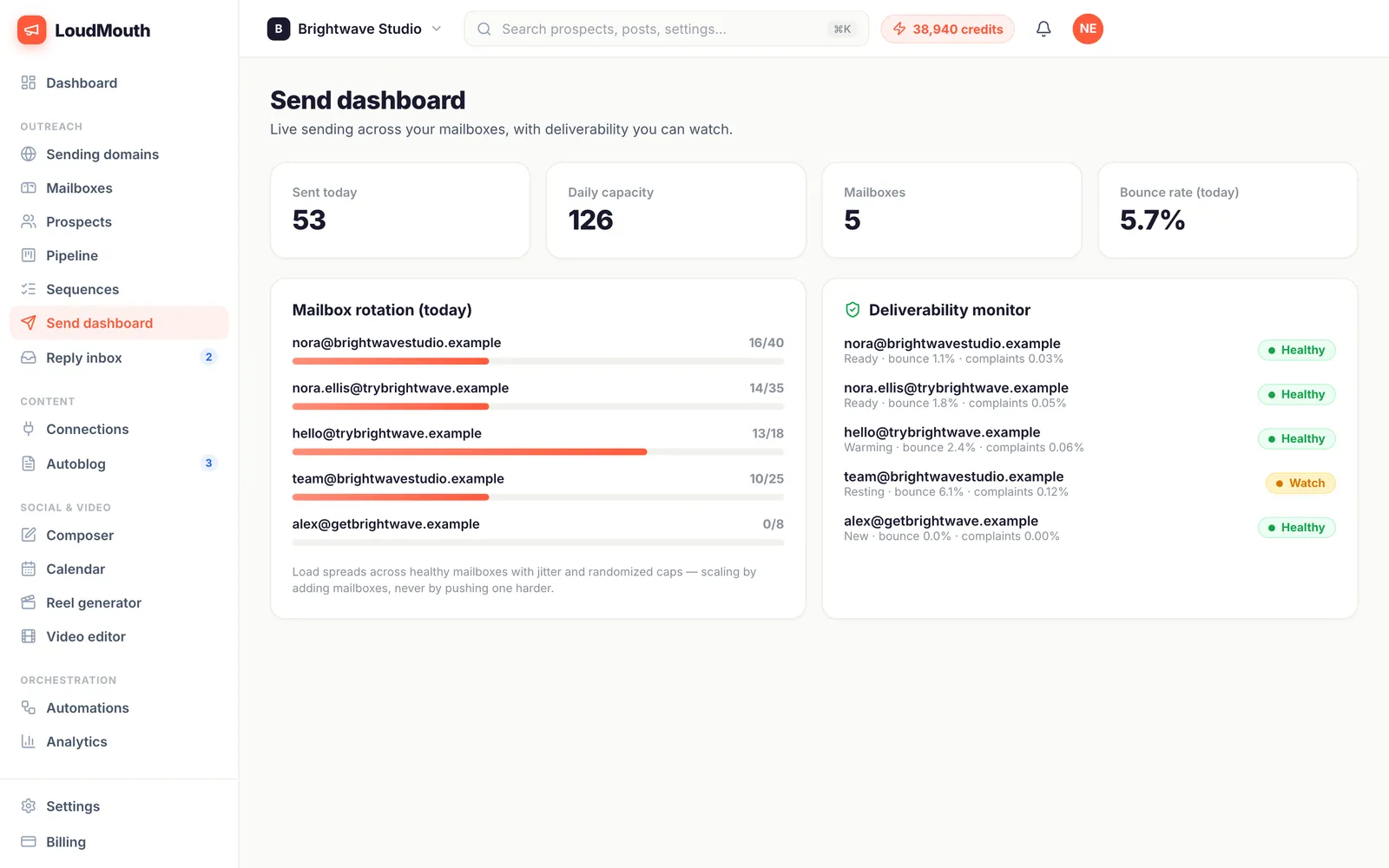
A daily tick advances warmup and recomputes bounce rates from real send records. Each queued email goes to the healthy mailbox with the most capacity left, so volume grows by adding mailboxes, not by pushing one harder. Complaint-based resting is coded, but no complaint feed is connected yet, so that rate reads zero.
Guardrails before the queue
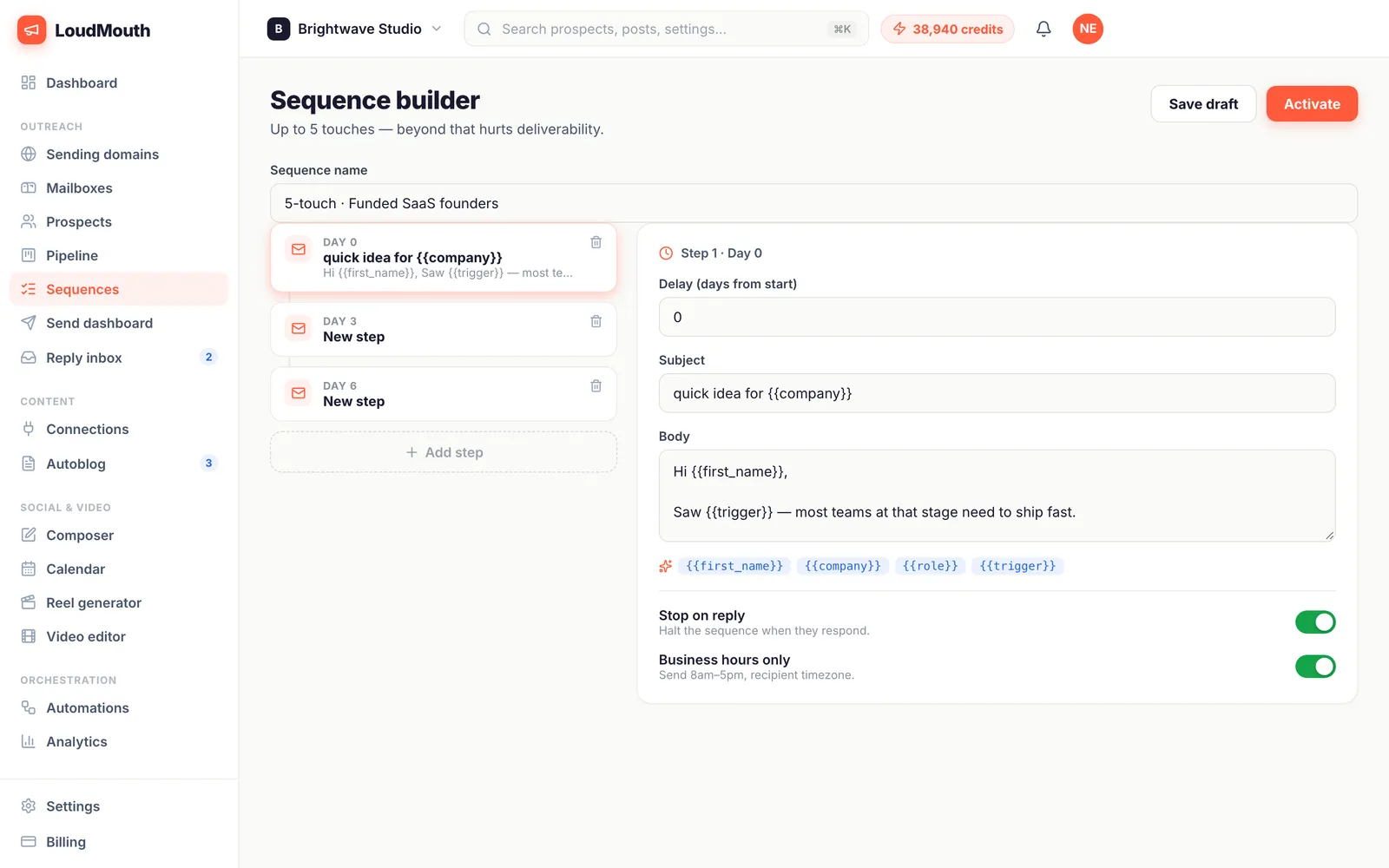
Before queuing an email, the scheduler stops the sequence if the address is suppressed, and skips the send if the workspace has no postal address, which every email must carry along with one-click unsubscribe headers (RFC 8058). Each send has a unique key per enrolment and step, and the sender claims a job atomically, so a duplicated queue message cannot send twice.